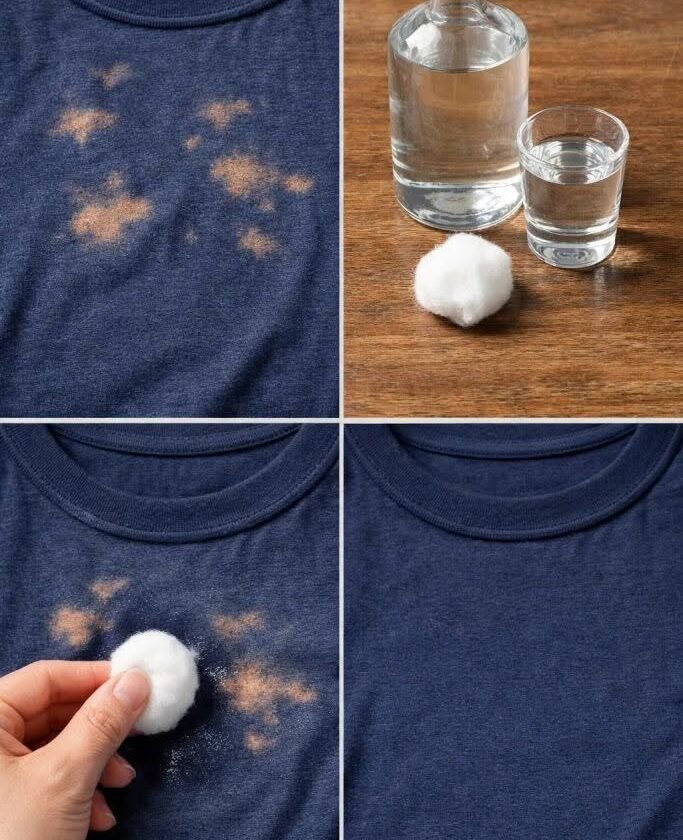
First Step: Rinse Out Any Lingering Bleach & Check Fiber Type
-
Rinse Immediately: If the bleach spot is fresh, rinse the area thoroughly with cool water and wash the garment on its own so active bleach doesn’t weaken fibers further or transfer to other laundry.
-
Check the Care Label (Fiber Matters):
-
Natural fibers (cotton, linen, viscose/rayon) take fabric dyes and fabric markers much more evenly than synthetics.
-
Synthetic or blended fabrics (polyester, nylon, spandex/elastane) resist standard home dye and can look patchy or uneven—so targeted touch-ups or turning the spot into a deliberate design often works better.
-
Practical Ways to Save Bleach-Stained Clothes
-
1. Fabric Markers or Dye Pens (Best for Small Spots & Dark/Solid Fabrics): For small drops or speckles on cotton, canvas, or dark shirts, use a washable textile/fabric marker or dye pen in a matching shade (or a contrasting color to create a pattern). Always test on an inside seam first and heat-set per the marker instructions so it survives washing.
-
2. Full-Garment or Tie-Dye / Shibori Dyeing (Best for Larger or Multiple Spots): If a spot is too wide to blend invisibly, re-dyeing the entire item a darker shade—or doing a tie-dye / dip-dye / ice-dye effect—can turn a random bleach mark into an intentional pattern. Keep in mind that stitched seams (often sewn with polyester thread) may stay lighter than dyed cotton fabric.
-
3. Deliberate Bleach Splatter / Ombré (Works on Certain Dark Cottons): Instead of hiding a single accidental bleach mark, lightly misting or flicking diluted bleach across an already-bleached dark cotton piece—followed by a thorough rinse and neutralizer/wash—can make it look like an intentional design, though repeated bleaching weakens fabric strength over time.
-
4. Patches, Embroidery, or Repurposing: Iron-on or sewn-on patches, simple embroidery, a pocket/trim accent, or turning a damaged shirt into a cleaning rag or tote works well when color-matching isn’t realistic or the fibers feel brittle.