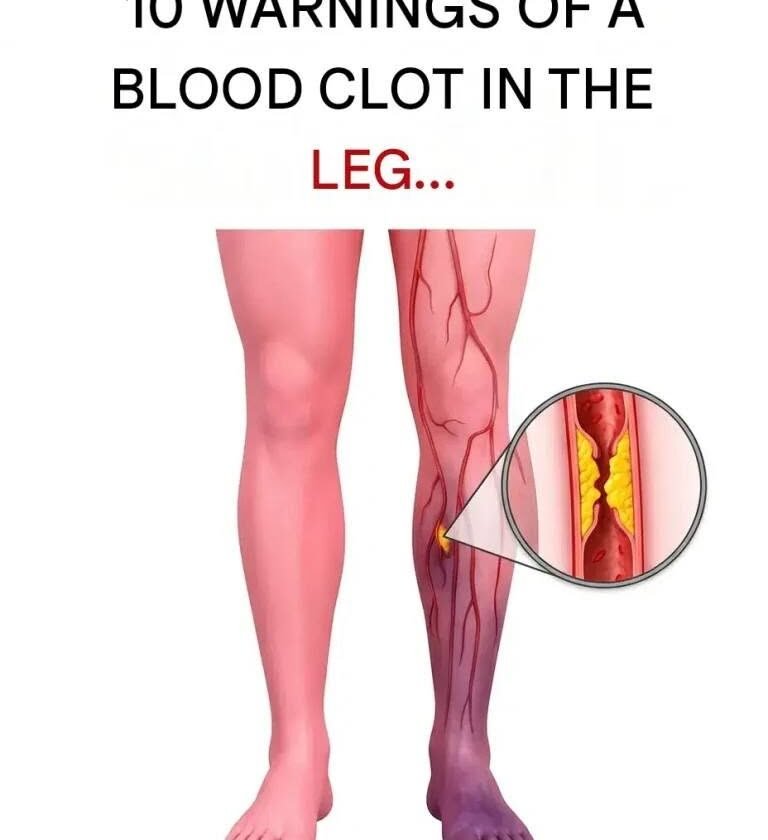
7 Warning Signs of a Blood Clot in the Leg
| Warning Sign | What It Typically Looks or Feels Like | Why It Happens |
| 1. One-sided swelling | Noticeable puffiness in just one calf, ankle, or thigh (one sock or pant leg feels tighter than the other). | The clot blocks normal blood return up the leg, forcing fluid into surrounding tissues. |
| 2. Deep cramping or aching pain | A persistent, dull ache or charley-horse-like tightness—usually starting in the calf—that worsens when standing or walking. | Pressure builds behind the blocked vein and triggers local tissue inflammation. |
| 3. Skin that feels warm to the touch | One patch of the calf or thigh feels noticeably warmer than the surrounding skin or the opposite leg. | Increased blood flow through smaller superficial veins rerouting around the blockage. |
| 4. Reddish, bluish, or darkened skin | A faint red, purple, or dusky tint over the affected area (on darker skin tones, look for subtle darkening or shiny, stretched skin). | Pooled, oxygen-depleted blood and localized vascular inflammation. |
| 5. Tenderness along a vein | Pain when gently pressing along the back of the calf, behind the knee, or along the inner thigh. | The clot directly irritates the sensitive inner lining of the deep vein. |
| 6. Visible, prominent surface veins | Superficial veins on one leg suddenly look fuller, darker, or more swollen than usual. | Blood is forced into smaller surface veins to bypass the obstructed deep vein. |
| 7. Unexplained heavy or tired feeling in one leg | A sudden sensation of dead weight or tightness in one leg without a recent injury or heavy workout. | Venous congestion slows circulation and oxygen delivery in that limb. |
Emergency Red Flags (Call for Help Immediately)
-
Sudden shortness of breath at rest or with minimal effort
-
Sharp chest pain that worsens when you take a deep breath or cough
-
Rapid heart rate, dizziness, lightheadedness, or coughing up blood
Proven Ways to Lower Your Risk (“Avoiding the Tragedy”)
-
Break up long periods of sitting: On flights, long drives, or desk days, stand up and walk for 3–5 minutes every 1 to 2 hours, and do seated ankle pumps and calf raises.
-
Stay well hydrated: Dehydration thickens blood slightly and slows venous flow—especially during travel or hot weather.
-
Use compression socks for high-risk travel or recovery: Graduated compression stockings gently support lower-leg circulation during long trips or prolonged standing.
-
Follow post-surgery and medical guidance: Recent surgery, leg injuries, pregnancy, hormonal birth control/HRT, smoking, and prolonged bed rest all raise clot risk—always follow prescribed blood-thinner or mobility plans after hospital stays.