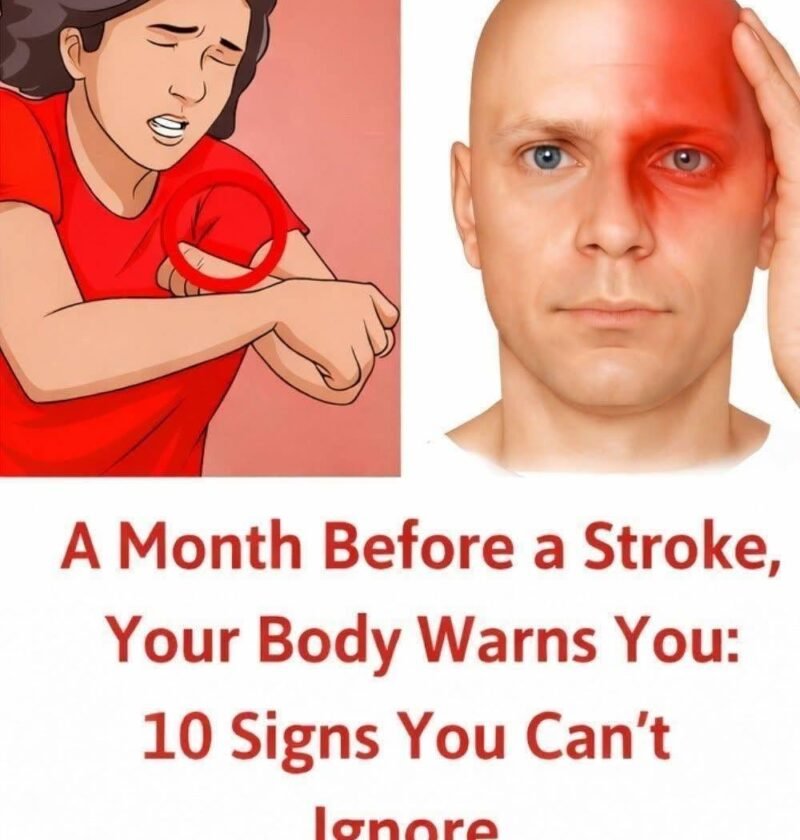
Most strokes happen suddenly without a month-long countdown—however, a Transient Ischemic Attack (TIA), or “mini-stroke,” can act as a critical warning days or weeks before a major stroke.
The viral headline claiming your body reliably gives “10 subtle signs a month ahead” is a myth. Those lists typically mix everyday nonspecific complaints (like general fatigue or occasional headaches) with actual emergency symptoms. What truly saves lives is recognizing sudden neurological symptoms—even if they disappear within minutes—because they signal temporarily blocked blood flow to the brain.
Real Warning Signs to Never Ignore
Whether they last briefly (a TIA) or persist (a stroke), seek emergency medical care immediately if any of these appear suddenly:
-
Face drooping: One side of the face droops or feels numb; an uneven smile.
-
Arm or leg weakness: Sudden weakness, heaviness, or numbness on one side of the body.
-
Speech difficulty: Slurred words, trouble speaking, or sudden confusion understanding simple speech.
-
Sudden vision changes: Blurred, blackened, or double vision in one or both eyes.
-
Loss of balance or coordination: Sudden dizziness, loss of equilibrium, or trouble walking.
-
Severe, sudden headache: An abrupt “thunderclap” headache with no known cause (especially linked to hemorrhagic stroke).
Remember the FAST Rule: Face drooping, Arm weakness, Speech difficulty, Time to call emergency services (1122 in Pakistan, or your local emergency number). Never “wait to see if it goes away”—if a TIA resolves on its own, your risk of a full stroke is highest in the next 48 hours to 7 days.
Silent Risk Factors That Build Up Over Months or Years
Instead of a neat 30-day symptom checklist, underlying vascular risks build quietly over time and can be caught during routine checkups:
-
Uncontrolled high blood pressure (the single biggest preventable cause of stroke)
-
Atrial fibrillation (AFib) or irregular heartbeats that can form clots
-
High cholesterol, diabetes, and smoking
If you or someone near you is experiencing any sudden neurological symptoms right now, seek urgent medical care immediately rather than waiting.