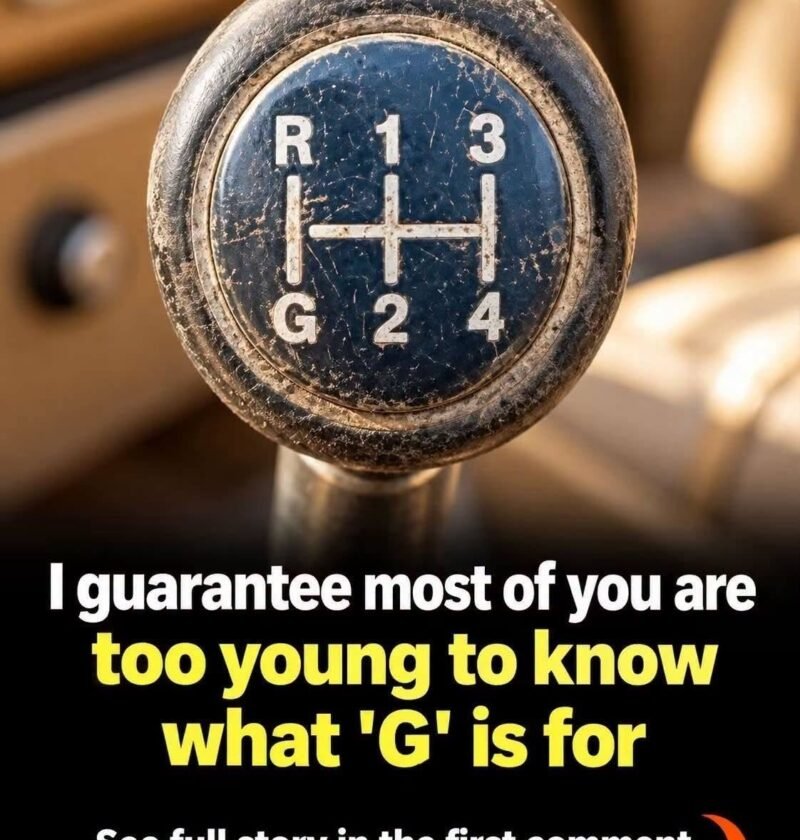
On a manual stick shift, the “G” stands for Gelände—the German word for “terrain” or “off-road” (literally “ground” or “land”). It is an ultra-low crawler gear designed for extreme off-roading, steep climbs, and heavy towing rather than normal street driving.
How the “G” Gear Works
You’ll find this marking on older or heavy-duty German vehicles—most famously classic Mercedes-Benz G-Wagons (Geländewagen), Unimogs, Volkswagen Syncro / Vanagon models, and certain European commercial vans or light trucks.
-
Maximum torque at walking speed: It uses a much shorter (numerically higher) gear ratio than 1st gear, multiplying engine torque so the vehicle can creep over rocks, deep mud, or steep inclines at very low speeds without stalling or riding the clutch.
-
Engine braking on steep descents: Going downhill off-road, shifting into G uses engine compression to keep the vehicle crawling slowly without overheating the brakes.
-
Skip it on regular roads: Because it is geared so low, hitting the redline in G usually only gets you to around 5–10 mph (8–16 km/h). On pavement, drivers start in 1st gear and leave G untouched unless hauling a heavy load up a steep hill.
Similar Markings in Other Vehicles
| Gear Label | Meaning | Where You See It |
| G (Gelände) | Terrain / crawler gear | Classic Mercedes G-Wagon, VW Syncro, Unimog |
| L or C | Low / Crawler gear | Heavy-duty trucks, 4×4 pickups (e.g., Ford Bronco 7-speed manual) |
| 1st (Granny Gear) | Ultra-low un-synchronized 1st gear | Older American pickup trucks (Chevy SM465, Ford NP435) |
| E (Economy) | Tall overdrive top gear | 1980s Volkswagen “4+E” manuals |