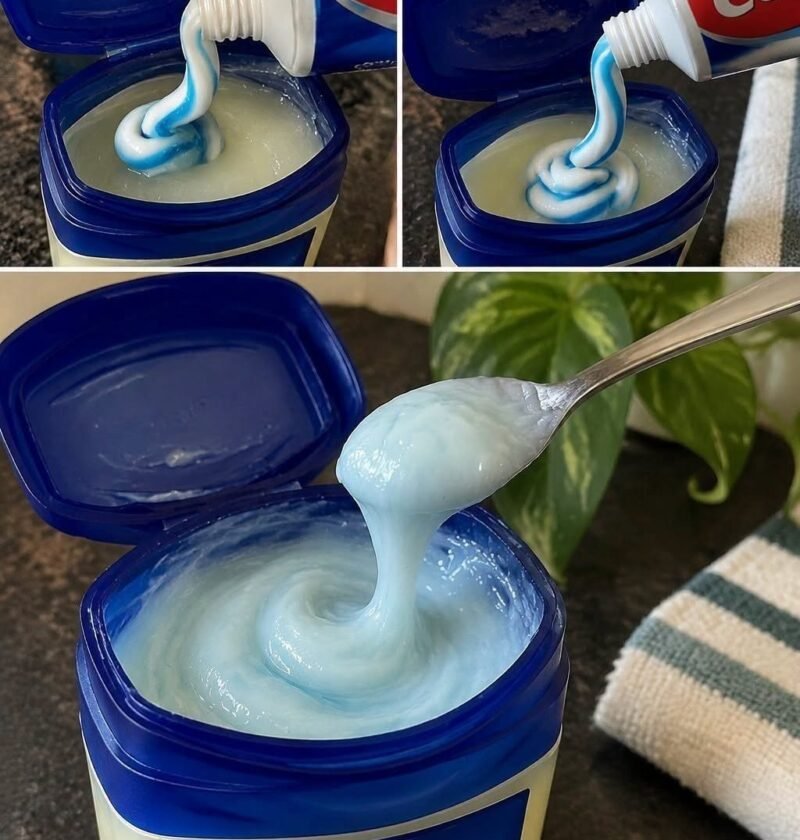
Why Toothpaste + Vaseline Backfires on Skin
-
Toothpaste is formulated for teeth, not living skin: Even “gentle” toothpastes typically contain sodium lauryl sulfate (SLS) (a strong foaming detergent), baking soda or hydrated silica (abrasives), alcohol, hydrogen peroxide, menthol/peppermint oil, and fluoride.
-
Vaseline traps irritants in place (occlusion): Plain petroleum jelly is inert and great on its own for locking moisture into clean skin—but when layered over or mixed with toothpaste, its occlusive barrier seals detergents and essential oils directly against the skin, intensifying irritation (irritant contact dermatitis).
-
Worsens breakouts and dark marks: Rather than clearing acne or fading pigmentation, inflamed, stripped skin often develops peeling, redness, rebound breakouts, or post-inflammatory hyperpigmentation (PIH)—darker spots that linger long after the original blemish is gone.
-
Fragile areas suffer fastest: Applying this mix to lips, under-eyes, or cracked heels can trigger painful stinging, chapping, allergic lip reactions (cheilitis), or secondary infection in deep heel fissures.
What to Use Instead (Depending on the Goal)
-
For dry, chapped lips or cracked heels: Apply a plain fragrance-free moisturizer (or a 10%–20% urea cream for thick, cracked heels) on slightly damp skin, then seal it with a thin layer of pure Vaseline—no toothpaste needed.
-
For active pimples: Use an over-the-counter 2.5%–5% benzoyl peroxide spot treatment, salicylic acid (0.5%–2%), or a plain hydrocolloid pimple patch to calm inflammation safely without burning surrounding skin.
-
For household scuff marks or tarnished metal: If a video meant this mix as a cleaning trick, plain baking soda + water (or a dedicated gentle cleanser) buffs scuffs without leaving a greasy petroleum film that attracts dust and stains fabrics.
When to see a doctor or dermatologist: Seek medical advice if a DIY skin mixture causes blistering, intense burning, swelling, oozing, or a spreading rash, or if persistent acne, dark spots, or deep heel cracks do not improve with gentle, targeted over-the-counter care.