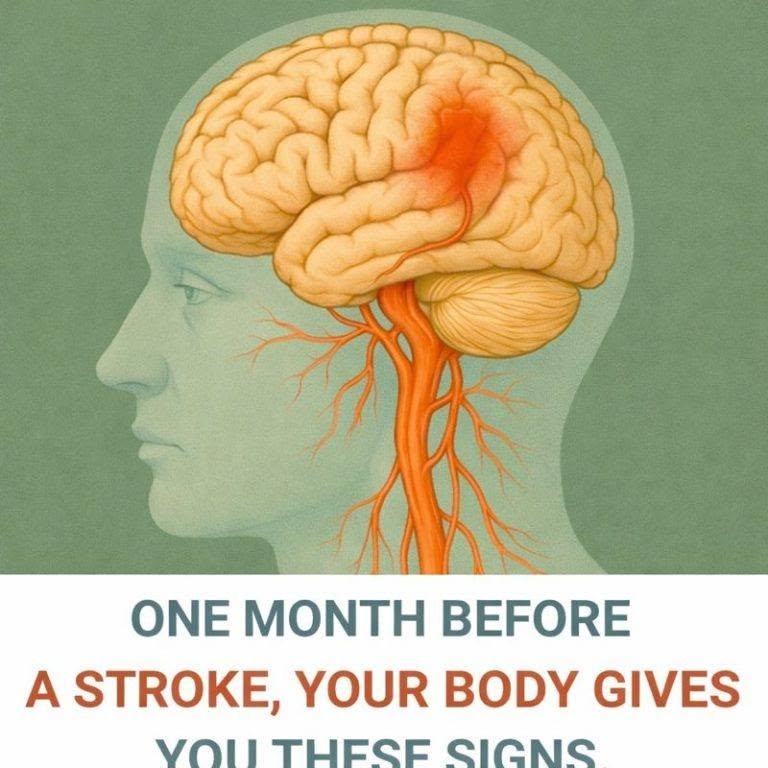
The Classic Emergency Signs: BE FAST
-
B – Balance: Sudden loss of balance, coordination, or unexplained dizziness that makes walking difficult.
-
E – Eyes: Sudden blurred, blackened, or double vision in one or both eyes.
-
F – Face Drooping: One side of the face droops or feels numb. Ask the person to smile—is it uneven or lopsided?
-
A – Arm Weakness: Sudden weakness or numbness in one arm (or leg). Ask the person to raise both arms—does one drift downward?
-
S – Speech Difficulty: Slurred speech, trouble speaking, or difficulty understanding simple sentences.
-
T – Time to Call Emergency Services: If any of these signs appear—even if they go away after a few minutes—call emergency services immediately. Do not drive yourself to the hospital.
Subtle Warning Signs Days or Weeks Before a Stroke
-
Brief Episodes of Numbness or Tingling: A sudden “pins and needles” sensation on one side of the body (face, arm, or leg) that lasts only a few minutes and then vanishes. This is a hallmark sign of a TIA.
-
Sudden, Unexplained Confusion: Momentary difficulty finding the right words, forgetting where you are, or struggling to complete a routine mental task.
-
A Sudden, Severe Headache: Unlike a typical tension headache or migraine, a stroke-related headache (often linked to a hemorrhagic stroke or arterial tear) hits abruptly with intense pain—frequently described as a “thunderclap” headache—with no obvious cause.
-
Hiccups Paired with Chest Pain or Shortness of Breath: Particularly in women, persistent, unexplained hiccups combined with atypical chest pain or sudden fatigue can occasionally be an early neurological warning sign.
-
Sudden Fatigue or Weakness: Feeling abruptly exhausted or heavy on one side of the body without physical exertion.
Why “Disappearing” Symptoms Are Still an Emergency
Action Step: Never “wait to see if it passes” or try to sleep off sudden neurological symptoms. Prompt medical evaluation allows doctors to identify blockages, blood clots, or irregular heart rhythms (like atrial fibrillation) and prevent a major stroke before it happens.