e
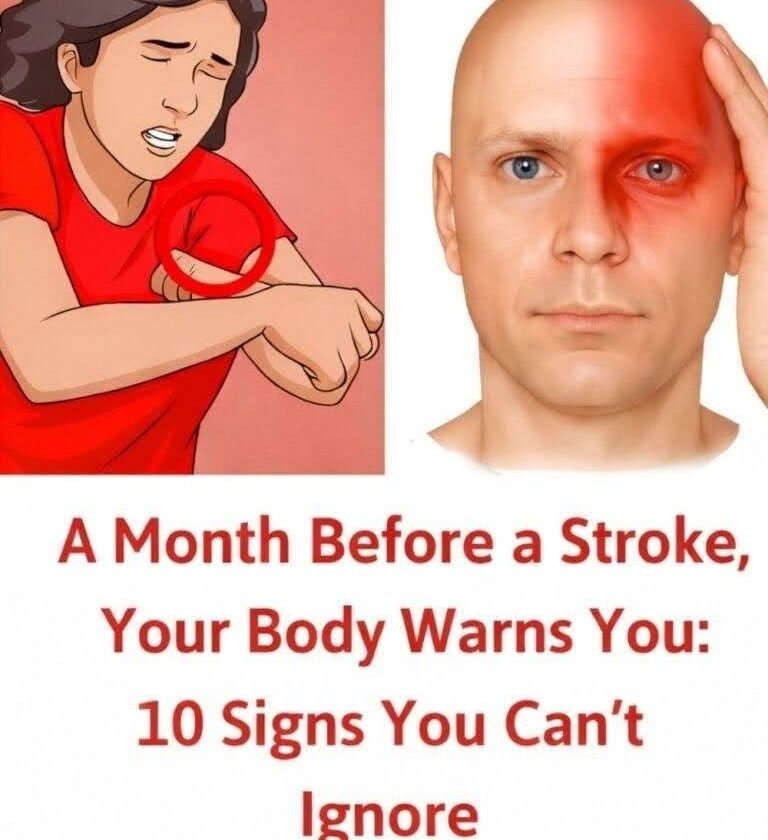
10 Early or Warning Signs That Should Never Be Brushed Off
-
Brief episodes of one-sided numbness, tingling, or weakness: A passing heaviness or “pins-and-needles” feeling in one arm, leg, or side of the face that clears up after a few minutes.
-
Temporary slurred speech or word-finding trouble: Briefly stumbling over familiar words, speaking garbled sentences, or struggling to understand someone—even if it resolves completely.
-
Passing vision changes or “curtain” over one eye: Brief blurriness, double vision, or temporary dimming/loss of sight in one eye.
-
Sudden unsteadiness, dizziness, or vertigo: An abrupt spell of spinning dizziness, loss of balance, or stumbling that comes on out of nowhere.
-
Unusual or sudden severe headache: Especially a sharp, abrupt headache—or a change in headache pattern—accompanied by nausea, neck stiffness, or neurological shifts.
-
Brief episodes of confusion or sudden disorientation: Moments of feeling mentally foggy, lost, or out of sync that aren’t typical for you.
-
Sudden clumsiness or dropping objects: Unexpectedly dropping a cup, fumbling keys, or having one hand or foot feel noticeably less coordinated.
-
Transient weakness in a specific limb: A leg briefly buckling while walking or an arm feeling unusually weak when lifting something light.
-
Episodes of lightheadedness or near-fainting: Feeling faint, woozy, or unsteady—particularly if linked to blood pressure swings or irregular heart rhythms.
-
Subtle or recurring neurological “blips” that come and go: Any brief sensory, speech, motor, or visual glitch that repeats over days or weeks. Even if each episode lasts only seconds or minutes, a pattern of recurring blips can precede a larger stroke.
How to Tell “Urgent Right Now” From “Schedule Promptly”
| Situation | What It Usually Means | What to Do |
| Symptoms appear suddenly right now (weakness, speech trouble, vision loss, severe dizziness/headache) | Possible active stroke or TIA—even if mild or starting to fade | Seek emergency medical care immediately. Note the exact time symptoms began. |
| Brief symptoms happened earlier today or over the past few weeks and cleared | Possible prior TIA or fluctuating blood flow—high near-term stroke risk | Get urgent same-day/rapid medical evaluation (stroke/TIA clinic or emergency department). |
| Gradual, long-standing symptoms (mild chronic tingling, long-term neck tension, slow fatigue) | Often non-stroke causes (nerve compression, sleep, anemia, blood pressure) | Book a prompt doctor’s visit to check blood pressure, heart rhythm, blood sugar, and circulation. |