That title is a textbook medical clickbait headline—often used by content farms or supplement ads to scare people taking blood pressure medication into clicking through a long slideshow (and eventually pitching “natural blood pressure alternatives”).
While amlodipine is one of the safest and most widely prescribed calcium channel blockers for high blood pressure and chest pain, it does have real side effects. Stripping away the fear-mongering, what doctors actually care about breaks down into two clear categories:
1. Common Side Effects (Annoying, Usually Harmless)
These happen because amlodipine relaxes and widens your blood vessels, and they often fade after a few weeks:
-
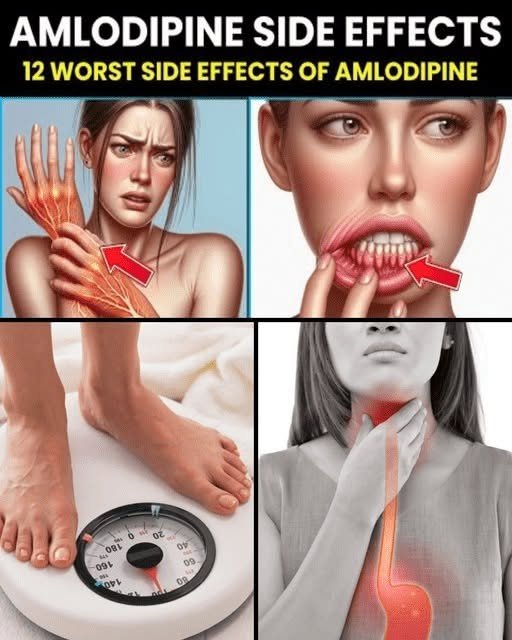
Swollen ankles and feet (peripheral edema): The most famous side effect. It isn’t dangerous fluid retention from heart failure—it’s just gravity pulling fluid into the lower legs because tiny blood vessels widened.
-
Flushing or feeling warm: Especially in the face and neck.
-
Mild dizziness or lightheadedness: Particularly when standing up too fast.
-
Fatigue or drowsiness.
-
Mild nausea, stomach pain, or heartburn.
-
Palpitations: A brief feeling that your heart is fluttering or beating faster as your body adjusts to lower blood pressure.
2. Rare Side Effects You Actually Shouldn’t Ignore
These are uncommon, but warrant a prompt call to your doctor (or emergency care if severe):
-
Worsening chest pain (angina) or a heart attack: Rarely, when first starting amlodipine or increasing the dose, people with severe coronary artery disease can experience more frequent chest pain.
-
Severe dizziness or fainting (syncope): A sign your blood pressure may have dropped too low.
-
Signs of liver trouble: Yellowing of the skin or eyes (jaundice), dark urine, or severe upper-right abdominal pain.
-
Severe allergic reaction: Swelling of the face, lips, tongue, or throat, or trouble breathing.
-
Gingival hyperplasia: Unusual swelling or overgrowth of the gums (rare, usually after long-term use).
Important Note: If you or someone you know is taking amlodipine, never stop taking it abruptly because of a scary headline—stopping suddenly can cause a dangerous spike in blood pressure or worsen chest pain. Always talk to a doctor first so they can adjust the dose or switch medications safely.