No single fingernail sign can accurately predict how long you will live. While doctors do examine fingernails for clues about systemic health, headlines claiming a single nail feature predicts life expectancy usually exaggerate research on nail growth rates as a proxy for biological aging, or overstate the prognostic value of specific nail abnormalities.
Where the “Life Expectancy” Claim Comes From
-
Nail Growth Speed & Biological Aging: Genetics researchers (including Harvard longevity researcher Dr. David Sinclair) have noted that the speed at which fingernails grow slows down steadily as we age—dropping by roughly 0.5% per year after age 30. Faster nail growth correlates with higher cellular turnover and blood circulation, making it a loose biomarker of biological aging rather than a crystal ball for mortality.
-
Terry’s Nails: Nails that appear mostly white or “ground-glass” opaque with a narrow pink or brown band at the tip are linked to serious systemic conditions—most notably liver cirrhosis, chronic heart failure, and type 2 diabetes. Because these underlying diseases affect survival if untreated, doctors take this sign seriously.
Legitimate Nail Signs Doctors Actually Look For
Rather than predicting a lifespan, changes in nail color, shape, or texture serve as early warning flags for treatable conditions:
| Nail Appearance | Medical Name | What It Can Signal |
| Rounded, bulbous fingertips & downward-curving nails | Nail clubbing | Chronic low blood oxygen from lung disease, heart conditions, or inflammatory bowel disease |
| Dark vertical brown or black streak | Longitudinal melanonychia | Usually benign pigment in darker skin tones, though a single new or widening band can indicate subungual melanoma |
| Spoon-shaped, concave nails | Koilonychia | Iron-deficiency anemia or hemochromatosis |
| Horizontal grooves across all nails | Beau’s lines | A temporary halt in nail growth triggered by severe illness, high fever, major stress, or chemotherapy |
| Tiny pinpoint dents | Nail pitting | Psoriasis, psoriatic arthritis, or alopecia areata |
Most Nail Changes Are Harmless
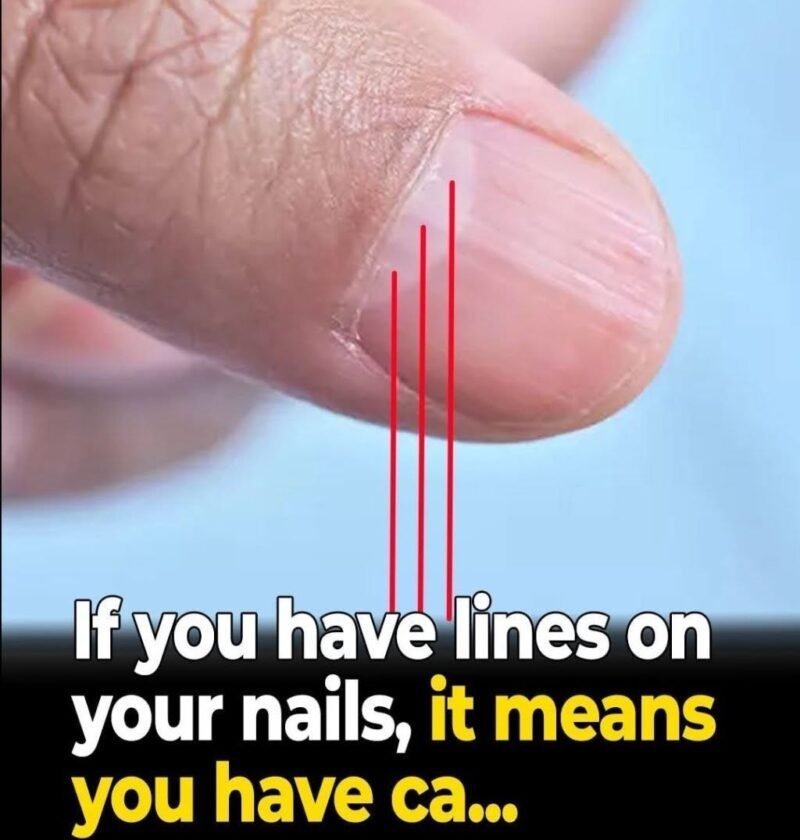
Everyday quirks—like vertical ridges (which become more common with normal aging), occasional white spots (minor bumps to the nail matrix, not calcium deficiency), or peeling tips from frequent handwashing and nail polish remover—are cosmetic rather than signs of internal disease.
When to get checked: Schedule a visit with a primary care doctor or dermatologist if a nail develops a new dark streak, begins separating from the nail bed without injury, changes shape (like clubbing), or if multiple nails turn unusually pale or white.