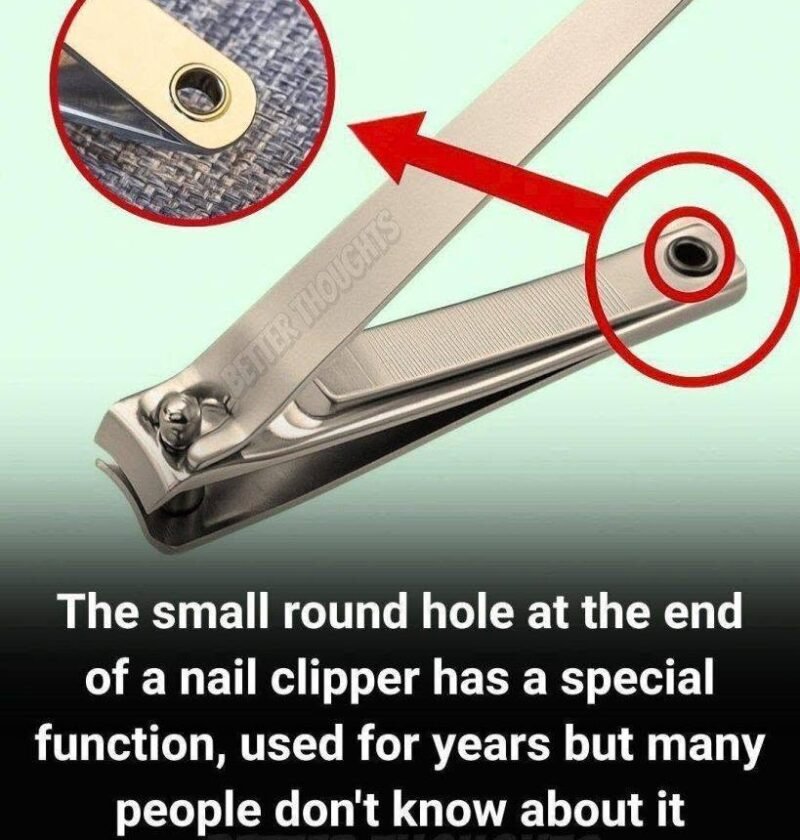
We all own them, toss them into bathroom drawers, and use them without a second thought. Yet, standard metal nail clippers harbor a microscopic design feature that almost everyone overlooks: the tiny hole punched right at the end of the lever.
At first glance, it looks like a cosmetic flaw or a random manufacturing artifact. But once you discover its true purpose, it becomes a brilliant example of thoughtful engineering—and a reminder of how small, overlooked design details make everyday tools vastly more functional.
What is the Tiny Hole Actually For?
1. The Keychain and Lanyard Anchor
The primary, intended purpose of that little hole is portability. In an era before zippered toiletry bags and molded plastic grooming kits, nail clippers were designed to be tethered.
-
By slipping a small split ring, cord, or lanyard through the hole, the clipper could be securely attached to a keychain, sewing kit, or travel kit. This ensured the tool was never lost at the bottom of a bag and was always ready when needed.
2. The Leverage Hack (Turning It Into a Multi-Tool)
For those who love clever mechanical hacks, that hole opens up an extra trick.
-
If you are struggling to clip a thick toenail or need extra leverage, looping a sturdy string, wire, or a small key ring through the hole allows you to pull or stabilize the lever at a better angle, giving your fingers more mechanical advantage without slipping.
Other Everyday Design Details We Take for Granted
Nail clippers aren’t the only humble household objects whose minor design features solve surprisingly clever problems. Consider these everyday examples:
-
The Hole in Your Spaghetti Spoon: That circular cutout in the center of a plastic pasta spoon isn’t just for draining water. It is expertly measured to hold one standard single serving of dry spaghetti before it goes into the boiling pot.
-
The Tiny Hole in Padlock Bottoms: If you look at the bottom of a brass padlock next to the shackle opening, you will see a microscopic drainage hole. It prevents rainwater and condensation from pooling inside the locking mechanism and rusting it shut during winter.
-
The Extra Eyelet on Running Shoes: Have you ever wondered why running shoes have that very last, seemingly isolated lace hole near the ankle? It is designed for a “heel lock” (or lace-lock) technique that prevents your heel from slipping and sliding forward, stopping painful blisters on long runs.
-
The Hole in a Pot Handle: That rectangular slot at the very end of a metal or silicone saucepan handle isn’t just for hanging the pot on a rack. While cooking, it acts as the perfect resting slot for your wooden spoon or stirring spatula, allowing dripping sauce to slide right back down into the pot rather than dirtying your stovetop.
The Wisdom of Small Details
Whether it’s a tiny hole on a nail clipper that keeps it from getting lost, or a 10-minute rest period that lets raw garlic synthesize life-saving allicin, the world is full of small design choices that optimize function. When we slow down and notice why things are built the way they are, everyday objects start to look a little bit more ingenious.