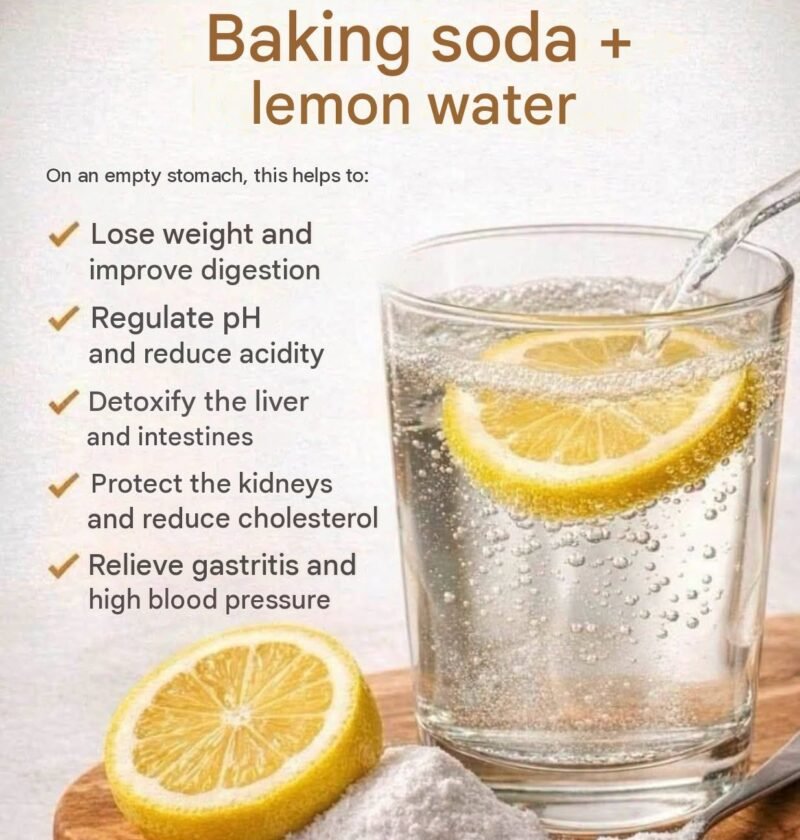
…clickbait health and wellness headlines love to use dramatic, miraculous hooks like “The natural solution to rebalance your health: Drink lemon water with baking soda to melt fat, cure acidity, and detox your body!” to trick you into believing a simple kitchen concoction can magically alter your systemic biochemistry.
While starting your morning with a glass of water is a healthy hydration habit, the unvarnished medical and biochemical reality is much more grounded: mixing an acid (lemon juice) and a base (baking soda) simply creates a fizzy, salty drink of water, citrate, and sodium; it does not “alkalize” your blood, melt body fat, or cure chronic illness.
Let’s separate viral wellness mythology from actual human physiology and biochemistry.
The Biochemistry: What Actually Happens When You Mix Lemon and Bicarbonate?
When you combine fresh lemon juice (which contains citric acid) and sodium bicarbonate (baking soda, which is a weak base) in water, an immediate acid-base neutralization reaction occurs:
$$\text{Citric Acid} + \text{Sodium Bicarbonate} \rightarrow \text{Sodium Citrate} + \text{Water} + \text{Carbon Dioxide (fizz)}$$
-
What you get: The fizz you see is carbon dioxide gas escaping. What remains in your glass is diluted sodium citrate, water, and traces of potassium and vitamin C.
-
The “Alkalizing” Myth: Internet wellness culture claims that this drink creates an “alkaline environment” in your body to fight disease. Biologically speaking, your blood pH is strictly and tightly regulated by your lungs and kidneys between 7.35 and 7.45. If your blood pH drifted outside of this narrow window even slightly, you would experience a life-threatening medical emergency. What you eat or drink cannot permanently change your systemic blood pH—your body neutralizes and filters it instantly.
Evaluating the Individual Ingredients
While the “magical mixture” is mostly pseudoscience, both ingredients have everyday utility when used sensibly:
1. Lemon Water
-
The reality: Lemon water is hydrating, provides a modest boost of vitamin C, and adds a refreshing flavor that encourages people to drink more water throughout the day. However, it doesn’t “detox” your liver (your liver and kidneys do that job entirely on their own) or burn belly fat.
-
The caveat: The citric acid in lemon juice, if consumed constantly throughout the day without rinsing your mouth, can slowly erode tooth enamel over time.
2. Sodium Bicarbonate (Baking Soda)
-
The reality: Baking soda is an antacid. In controlled, medical settings (or occasional mild heartburn), it can temporarily neutralize stomach acid because it is basic.
-
The danger: Drinking baking soda regularly introduces a massive amount of sodium into your diet. For anyone with high blood pressure, heart disease, kidney issues, or fluid retention, regular doses of sodium bicarbonate can be genuinely harmful. Furthermore, neutralizing your stomach acid too aggressively can interfere with your digestion and absorption of vital nutrients like iron and B12.
The Bottom Line
Enjoy a glass of warm lemon water in the morning if you like the taste and it helps you stay hydrated. But skip the baking soda concoctions and the pseudoscientific promises of systemic detoxing. Your organs are already expert chemists.