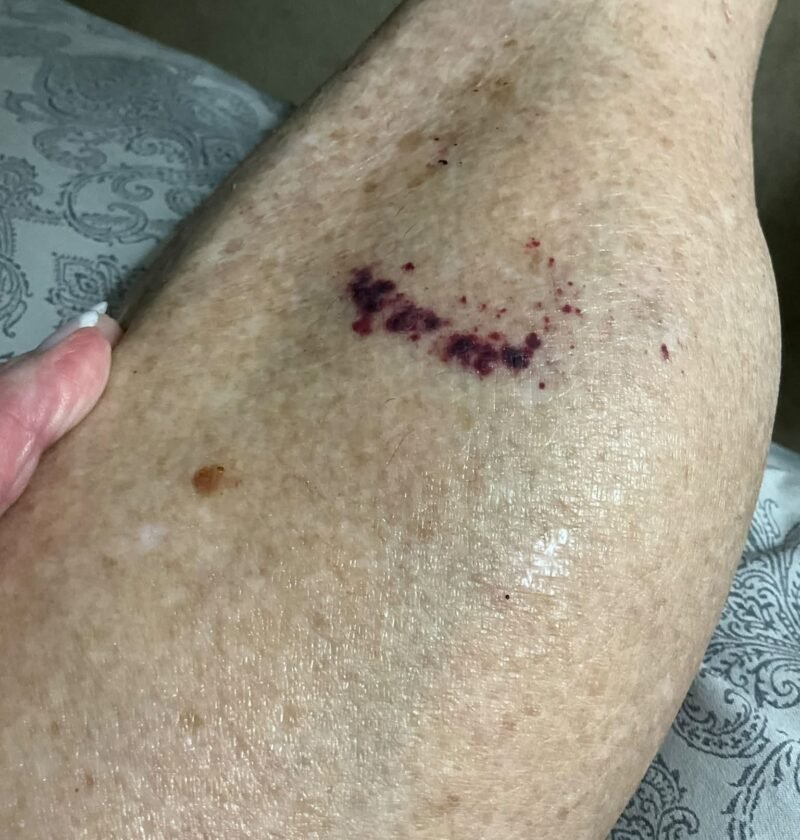
When random spots appear on the skin, it can feel frustrating or unsettling when a doctor looks at them and doesn’t seem alarmed. However, there are very clear medical reasons why doctors react this way, rooted in how common and harmless the vast majority of skin spots actually are.
Why Doctors Often Aren’t Worried
-
Benign Lesions Outnumber Everything Else: The vast majority of random skin spots are completely harmless, non-cancerous growths (such as cherry angiomas, seborrheic keratoses, benign moles, or freckles). Because dermatologists and primary care doctors see thousands of these every week, they can often identify them instantly as benign.
-
Lack of “Red Flag” Features: When doctors examine skin spots, they look for specific warning signs—such as asymmetrical shapes, irregular or blurred borders, multiple colors, rapid changes in size, or bleeding. If a spot is uniform, stable, and lacks these features, it falls into the category of normal skin aging or harmless variation.
-
Prioritizing Serious Risks: Doctors are heavily trained to screen for skin cancers like melanoma or squamous cell carcinoma. When a spot clearly lacks malignant features, their lack of worry is actually reassurance that it does not require aggressive intervention or biopsy.
What Are These Common Spots?
Depending on what your spots look like, they usually fall into a few very common categories:
-
Cherry Angiomas: Small, bright red, smooth dome-shaped bumps made of clustered capillaries. They typically start appearing in adults in their 30s or 40s and tend to multiply with age. They are entirely harmless collections of blood vessels.
-
Seborrheic Keratoses: Waxy, scaly, or “stuck-on” looking growths that can range in color from tan to brown or black. They are extremely common benign skin growths that often increase as people get older.
-
Solar Lentigines (Age Spots / Sun Spots): Flat, darkened areas of skin caused by cumulative sun exposure over the years.
When a Spot Does Warrant Closer Attention
Even though most random spots are harmless, it is always important to monitor your skin using the ABCDE rule for moles and spots that change:
-
A – Asymmetry: One half doesn’t match the other half.
-
B – Border: The edges are irregular, ragged, notched, or blurred.
-
C – Color: The color is not uniform and may include different shades of brown or black, or patches of pink, red, white, or blue.
-
D – Diameter: The spot is larger than 6 millimeters (about the size of a pencil eraser), although melanomas can sometimes be smaller.
-
E – Evolving: The spot is changing in size, shape, color, or elevation, or begins to bleed, itch, or crust.
If you have a specific spot that is changing, itching, bleeding, or causing you persistent worry—even if a doctor previously brushed it off—it is always completely reasonable to ask for a dedicated skin check or a second opinion from a board-certified dermatologist.