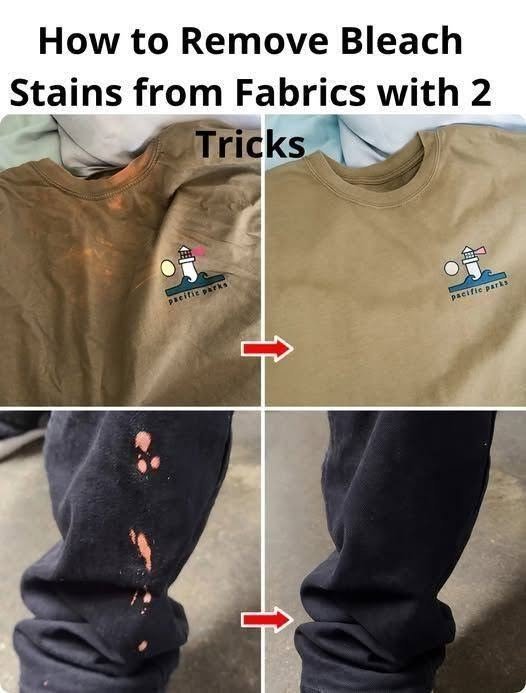
Unlike miracle cleaning hacks that promise to magically reverse chemical damage, bleach is a destructive agent. Sodium hypochlorite doesn’t just stain fabric—it chemically destroys and strips the dye molecules right out of the fibers.
Because true bleach spots are actually permanent color loss, you cannot “wash” the bleach away. However, depending on the fabric and the severity of the damage, you can rescue your clothes using two practical, time-tested tricks: re-coloring the spot or re-distributing surrounding dye.
Here is how to use these two effective methods to save a favorite garment.
Trick 1: The Fabric Marker or Dye Camouflage (Best for Dark and Colored Fabrics)
Since bleach removes color, the most reliable way to fix the spot is to put color back in. This works wonders on cotton, denim, canvas, and heavy blends.
What You Need:
-
Fabric markers (or a permanent marker matching the garment color in a pinch)
-
Liquid fabric dye (like RIT) and a cotton swab
-
Water
Step-by-Step Method:
-
Neutralize the Bleach First: Before adding any color, rinse the area thoroughly with cold water mixed with a tiny splash of white vinegar or a commercial bleach neutralizer (like Thiosulfate). This stops any residual bleach from eating away at the new dye you’re about to apply.
-
Test and Match: If using a fabric marker, test the color on an inside seam first.
-
Apply the Color:
-
For small spots: Carefully dot or feather the fabric marker onto the bleached area. Lightly dab it with a damp cloth immediately afterward to blend the edges into the surrounding fabric so it doesn’t look like a harsh dot.
-
For larger spots: Mix a tiny cup of concentrated liquid fabric dye matching your garment. Use a cotton swab to dab the dye precisely onto the bleached patch. Let it set for a few minutes, heat-set it with a warm iron (if the fabric tag allows), and then wash the garment separately.
-
Trick 2: Alcohol Dab-and-Spread (Best for Minor Splatters on Synthetic or Dark Blends)
Sometimes, a bleach splash doesn’t strip 100% of the pigment immediately; it leaves a faded or feathered halo where excess dye from the surrounding intact fabric can be coaxed back inward.
What You Need:
-
Rubbing alcohol (isopropyl alcohol)
-
Cotton balls or cotton swabs
-
A clean white cloth or paper towel
Step-by-Step Method:
-
Dampen with Alcohol: Soak a cotton ball or swab in rubbing alcohol.
-
Rub from the Outside In: Gently dab and rub the edges of the bleached spot, working your way inward toward the center.
-
Bleed the Pigment: The alcohol temporarily breaks down and loosens the surrounding textile dye, allowing it to migrate slightly into the faded or bleached zone, helping to camouflage the contrast.
-
Rinse and Dry: Once you’ve softened the harsh edges of the stain, rinse the garment in cold water and let it air dry.
The Reality Check
If bleach has completely destroyed natural fibers (like cotton or wool) to the point where the fabric feels thin, rough, or develops a hole, no amount of dye or alcohol will fix it. In those cases, your best “trick” is turning a patch into a creative embroidery accent or a stylish iron-on patch!