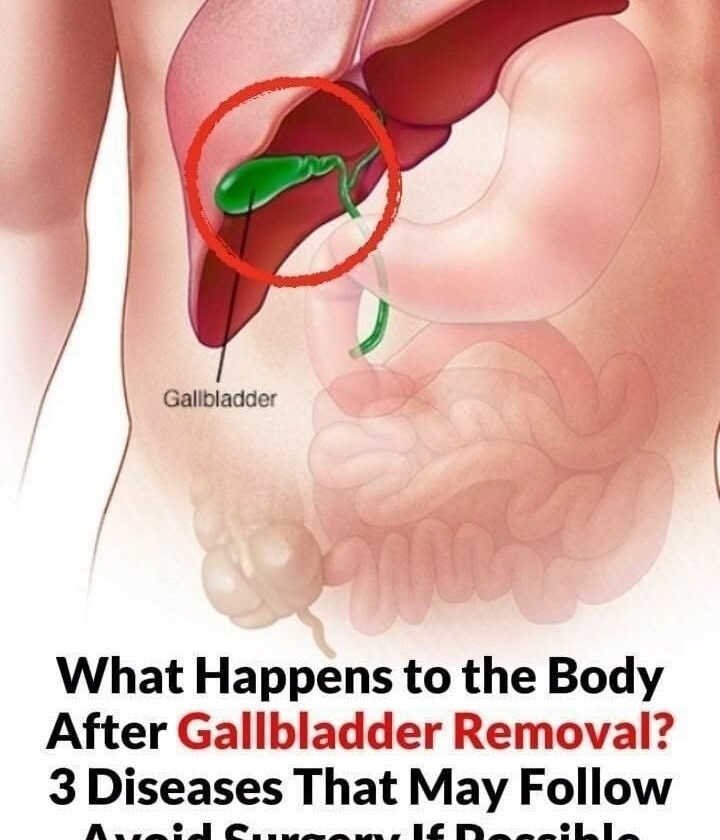
While gallbladder removal (cholecystectomy) is one of the most common and generally safe surgeries performed today, the headline hits on a real medical debate: the gallbladder is not a useless organ.
When functioning, it acts as a reservoir, storing and concentrating bile produced by the liver and releasing it precisely when your body needs to digest fats. When it is removed, your liver loses that storage tank and instead drips bile continuously into your digestive tract.
While doctors recommend the surgery when a gallbladder is dangerously inflamed, infected, or packed with painful stones, avoiding unnecessary surgery—when dietary changes, lifestyle management, or medical dissolution can work—is always preferable. For those who do undergo the procedure, the structural change in how bile flows can occasionally lead to specific long-term challenges.
3 Conditions You Could Develop After Gallbladder Removal
When post-surgery digestive complications linger, doctors often group them under the umbrella of Post-Cholecystectomy Syndrome (PCS). Within that, several distinct conditions can emerge:
1. Chronic Bile Acid Malabsorption (Chronic Diarrhea)
Without a gallbladder to meter out bile, bile drips continuously into the small intestine. When you eat a heavy or fatty meal, there may not be enough concentrated bile to break it all down, while excess bile at other times acts as a natural laxative. This results in sudden, urgent, and frequent bouts of watery diarrhea for a subset of patients—sometimes lasting years after the surgery.
2. Bile Reflux Gastritis and Esophagitis
Because bile is no longer held in reserve, it can flow backward (reflux) out of the small intestine into the stomach and even up into the esophagus. Unlike stomach acid, alkaline bile is deeply irritating to the delicate mucosal lining of the stomach and esophagus, leading to persistent nausea, burning stomach pain, acid reflux, and chronic indigestion.
3. Sphincter of Oddi Dysfunction (SOD) or Biliary Spasms
The Sphincter of Oddi is a muscular valve that controls the flow of digestive juices into your small intestine. Without the regulatory pacing of the gallbladder, this valve can become irritated, inflamed, or prone to painful spasms. This can mimic the exact upper-right abdominal pain and cramping that you felt before your gallbladder was removed.
Why Avoiding the Surgery (When Possible) Is Ideal
Surgeons will always perform a cholecystectomy for acute emergencies—such as a gallbladder attack, infection, or blockage—because a dying or ruptured gallbladder is life-threatening.
However, for mild, manageable gallstones or biliary sludge, doctors increasingly encourage conservative management whenever safe. Avoiding surgery spares you from:
-
Permanent anatomical changes: Your body has to find a new way to process dietary fats without a storage mechanism.
-
Lingering digestive distress: Up to 10% to 30% of patients experience chronic digestive symptoms that can be just as frustrating as the original issue.
If you still have your gallbladder, protecting its health through a fiber-rich diet, healthy fats, maintaining a stable weight, and avoiding rapid weight-loss crash diets can help keep it functioning smoothly for life.