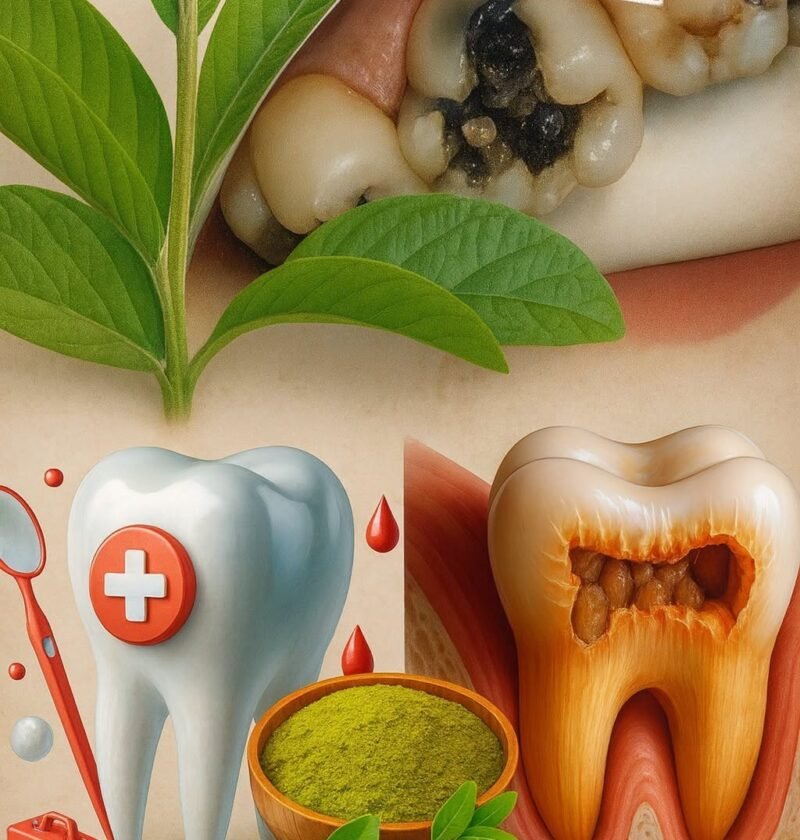
When internet wellness articles tout guava leaves as a powerful, budget-friendly way to “treat tooth decay,” it taps into an interesting intersection of traditional herbal medicine and modern science.
In folk remedies across tropical regions, chewing on tender guava leaves has long been used as a natural mouthwash for toothaches, bleeding gums, and oral inflammation. From a scientific standpoint, guava leaves do pack potent antimicrobial, anti-inflammatory, and antioxidant compounds (like flavonoids and tannins) that help combat the oral bacteria responsible for plaque and gum disease.
However, it is vital to understand what natural remedies can—and cannot—do when it comes to your teeth. Guava leaves cannot reverse established dental cavities or “rebuild” decayed tooth enamel. Once a cavity breaches the hard outer enamel and forms a structural hole, only a dentist can clean and fill it.
Where guava leaves can shine is as a complementary, natural way to soothe gum inflammation, reduce bacterial load, and manage oral discomfort. Here are three traditional ways people utilize them, along with important modern dental safety notes.
Top 3 Ways People Use Guava Leaves for Oral Health
1. The Guava Leaf Mouthwash Infusion
-
How to make it: Take 5 to 6 fresh, tender guava leaves, wash them thoroughly, and boil them in a cup of water for about 10 to 15 minutes. Let the liquid cool to a warm, comfortable temperature, strain out the leaves, and use the liquid as a mouth rinse after brushing.
-
The Benefit: The extracted tannins and flavonoids help tighten gum tissues, reduce swelling from gingivitis, and neutralize odor-causing bacteria.
2. Direct Chewing (The Traditional Method)
-
How to do it: Select one or two very young, tender guava leaves, wash them carefully, and chew them slowly near the sore tooth or inflamed gum area, allowing the natural juices to bathe the mouth before spitting out the pulp.
-
The Benefit: This releases the fresh essential oils and active antimicrobial compounds directly onto the affected tissue, offering quick relief for localized gum soreness.
3. Guava Leaf and Salt Paste
-
How to make it: Crush a handful of fresh guava leaves into a fine paste using a mortar and pestle, mix in a tiny pinch of sea salt, and gently apply it to sore gums or around an irritated tooth area. Leave it for a few minutes before rinsing thoroughly with warm water.
-
The Benefit: The salt acts as a mild osmotic draw and extra antibacterial agent, combining with the botanical properties of the leaves to soothe localized irritation.
Important Safety Caveat: When to See a Dentist
While herbal rinses are wonderful for supporting overall gum health and freshening the mouth, relying on them to “cure” a deep cavity or a tooth infection is dangerous.
-
The Risk of Delay: If tooth decay is left untreated, bacteria will eventually penetrate the pulp chamber of the tooth, causing a painful abscess, nerve death, or systemic infection.
-
The Bottom Line: Use natural remedies to complement your daily hygiene (brushing with fluoride toothpaste and flossing), but never skip professional dental checkups if you have structural tooth damage or persistent pain.