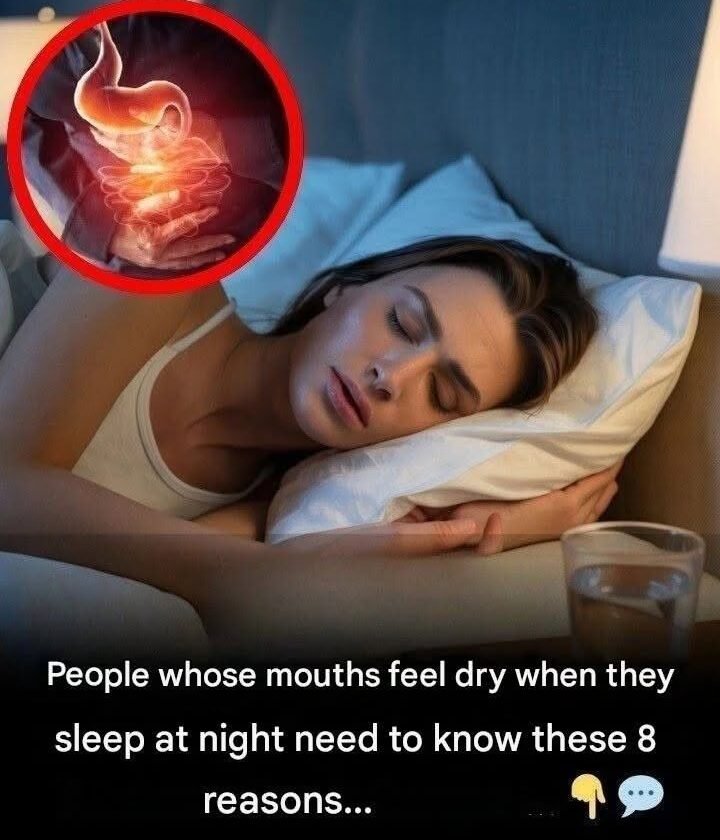
Waking up in the middle of the night or the morning with your tongue stuck to the roof of your mouth and a parched, burning throat is intensely uncomfortable. While occasional dry mouth happens to everyone—especially if you slept with your mouth open after a late-night snack—waking up parched on a regular basis is more than just an annoyance.
In medicine, chronic dry mouth is known as xerostomia. Saliva is your mouth’s natural defense system, protecting your teeth from decay, keeping tissues lubricated, and aiding digestion. When your salivary glands slow down overnight, a few common culprits are usually to blame:
1. Mouth Breathing (The #1 Culprit)
If your nasal passages are even slightly blocked due to allergies, a deviated septum, dust, or nighttime congestion, your body automatically switches to breathing through your mouth while you sleep.
-
Why it happens: A steady stream of air rushing past your oral tissues all night acts like a blowdryer, evaporating every drop of saliva and leaving your tongue and gums completely dry by morning.
2. Obstructive Sleep Apnea (OSA)
Waking up with dry mouth is actually one of the classic, frequently overlooked warning signs of sleep apnea.
-
Why it happens: When your airway repeatedly collapses or narrows during sleep, your body forces you to gasp for air through your open mouth, severely drying out your oral cavity. If your dry mouth is accompanied by loud snoring, morning headaches, or waking up gasping, it is worth discussing with a doctor.
3. Medication Side Effects
Hundreds of common prescription and over-the-counter drugs list dry mouth as a primary side effect.
-
The Culprits: Antihistamines (like Benadryl or Zyrtec), decongestants, high blood pressure medications (like diuretics and beta-blockers), antidepressants, and anxiety meds frequently suppress salivary gland function.
4. Chronic Dehydration
Sometimes the fix is as simple as your overall fluid balance. If you aren’t drinking enough water throughout the day, or if you drank alcohol or heavily salted foods close to bedtime, your body prioritizes vital internal organs, causing your salivary glands to dial back production.
5. Evening Alcohol or Caffeine Consumption
That glass of wine with dinner or a late-afternoon espresso can wreak havoc on your nighttime moisture levels.
-
Why it happens: Alcohol is a potent diuretic and muscle relaxant. It dehydrates your entire system while relaxing the muscles in your throat and jaw, making you more prone to snoring and open-mouth breathing.
6. Aging and Natural Gland Changes
While dry mouth is a medical symptom rather than an inevitable part of getting older, the risk does increase with age. Older adults are statistically more likely to take multiple medications that cause dryness, and salivary glands can naturally lose a fraction of their peak efficiency over decades.
7. Smoking and Nicotine Use
Inhaling tobacco, vape aerosol, or using oral nicotine products directly irritates and damages the salivary glands, while also restricting blood flow to the oral tissues, leading to chronic dryness.
8. Systemic Health Conditions
Persistent dry mouth can occasionally be an indicator of an underlying medical condition, such as Sjögren’s syndrome (an autoimmune disorder that attacks moisture-producing glands), diabetes, or nerve damage affecting the head and neck.
Simple Ways to Protect Your Mouth Overnight
If you frequently battle morning dry mouth, a few small adjustments can bring relief:
-
Hydrate Strategically: Keep a glass of water on your nightstand, but avoid guzzling a massive amount right before bed unless you want a 3:00 AM bathroom trip.
-
Run a Humidifier: Adding moisture back into your bedroom air with a cool-mist humidifier prevents your nasal passages and throat from drying out.
-
Check Your Meds: If a prescription medication is the obvious culprit, talk to your doctor about adjusting the timing or exploring alternative options.
-
Breathe Through Your Nose: Treating seasonal allergies or using nasal strips can dramatically reduce nighttime mouth breathing.