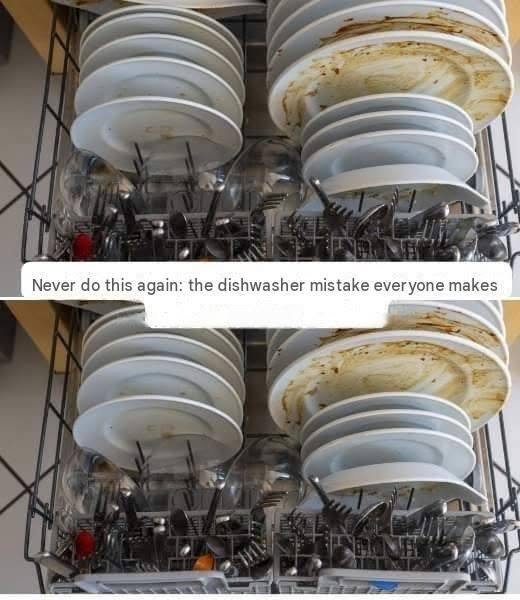
While people often point to running half-empty loads or skipping the eco-mode button, the most widespread and counterproductive mistake households make is pre-rinsing dishes under the tap before loading them.
It feels like good housekeeping—washing away chunks of food so they don’t gunk up the machine—but it is actually wasting your money, your time, and thousands of gallons of water.
Here is why this habit costs you, along with a few other expensive dishwasher traps to watch out for.
Why Pre-Rinsing Backfires
-
Wasted Water & Energy: Running the kitchen faucet to rinse a plate uses anywhere from 2 to 5 gallons of water per minute. Multiply that across a day’s worth of dishes, and you are essentially washing them twice.
-
Tricking Modern Sensors: Modern dishwashers and high-end enzyme detergents are engineered to cling to and break down food particles, proteins, and oils. In fact, many newer machines have smart soil sensors that judge how dirty the load is to determine water usage and cycle length. If your dishes go in pristine, the sensor may give you a shorter or weaker clean, or you might be doing heavy work that the machine was built to do for you.
-
The Better Alternative: Scrape, don’t rinse. Just scrape large, solid food scraps (like bones, rice, or thick paste) into the trash or compost bin, and load the dishes straight in.
3 Other Dishwasher Mistakes That Quietly Add Up
1. Always Using the “Heated Dry” Setting
Selecting “Heated Dry” or “Extra Dry” blasts high heat to evaporate moisture, but it relies on a heavy-duty heating element that significantly drives up your electricity bill.
-
The Fix: Switch to an air-dry or eco mode, or simply crack the dishwasher door open a few inches at the end of the cycle to let the steam escape naturally.
2. Overcrowding and “Cramming” Racks
When you jam too many plates, bowls, and pots into a single load to avoid running a second cycle, you block the water jets.
-
The Fix: If the spray arms can’t spin freely or water can’t reach certain surfaces, you’ll end up with dirty dishes that require rewashing—doubling the energy, water, and detergent used.
3. Using Too Much Detergent (or Tossing Pods Wrong)
Pouring extra powder or liquid—or throwing a pod loose into the bottom of the tub instead of the dispenser—backfires. Excess detergent creates heavy foam that actually dampens the water pressure inside the machine, leaving greasy films behind and forcing you to run extra cycles.