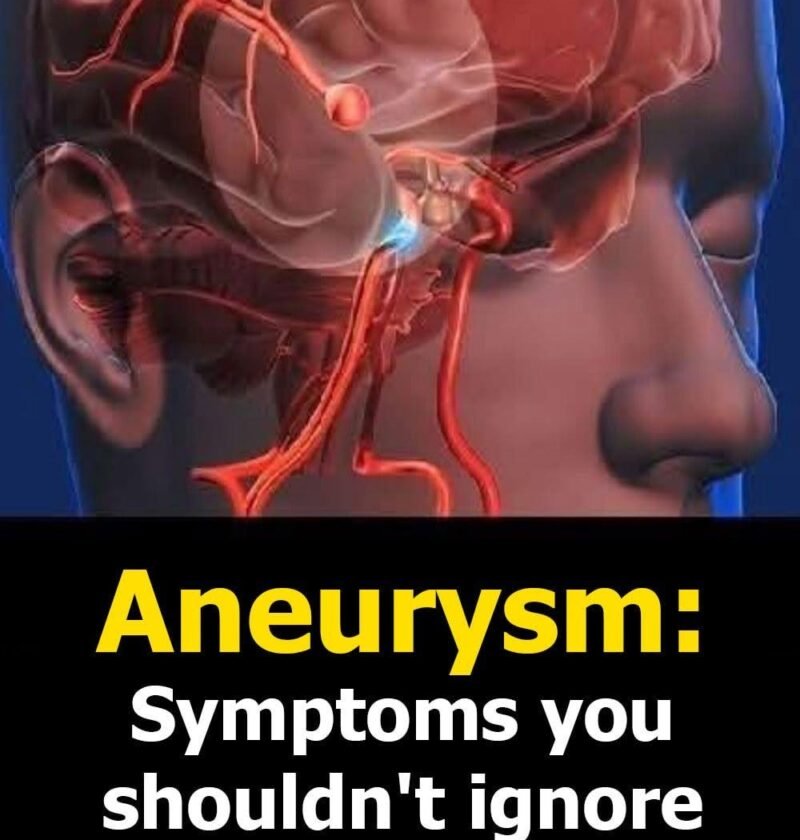
An aneurysm is a weakened, bulging area in the wall of a blood vessel. Many aneurysms cause no symptoms until they become large or rupture, which is why sudden symptoms can be a medical emergency.
Possible warning signs (depending on the location)
Brain aneurysm
- Sudden, extremely severe headache (“the worst headache of my life”)
- Neck stiffness
- Nausea and vomiting
- Sensitivity to light
- Blurred or double vision
- Drooping eyelid
- Seizures
- Loss of consciousness
Abdominal aortic aneurysm (AAA)
- Deep, persistent pain in the abdomen or back
- A pulsating feeling in the abdomen
- Sudden, severe abdominal or back pain if it ruptures
Thoracic aortic aneurysm
- Chest pain
- Back pain
- Shortness of breath
- Hoarseness or difficulty swallowing (if the aneurysm presses on nearby structures)
Seek emergency medical care immediately if someone has:
- A sudden, severe headache unlike any they’ve had before
- Sudden severe chest, back, or abdominal pain
- Fainting, collapse, or loss of consciousness
- Symptoms of a stroke (face drooping, arm weakness, speech difficulty)
Risk factors
- Smoking
- High blood pressure
- Older age
- Family history of aneurysm
- Hardening of the arteries (atherosclerosis)
- Certain inherited connective tissue disorders