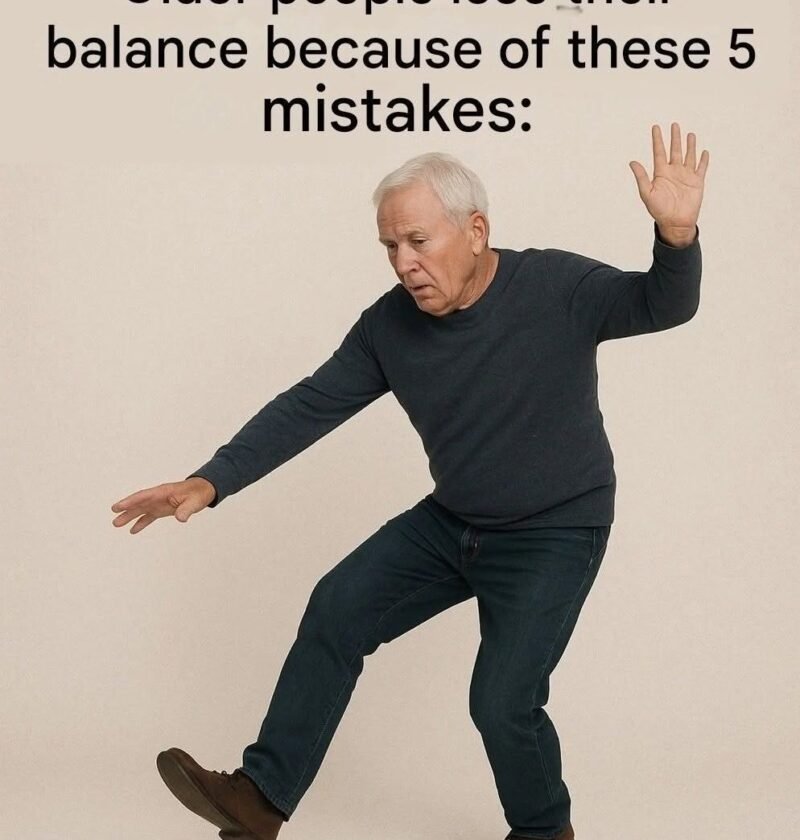
Clickbait wellness articles love to pin age-related balance loss on a single dramatic cause or a trendy “brain-training” trick. In clinical reality, balance is not maintained by a single organ—it is a complex, multi-system neurological balancing act.
As we age, balance declines gradually due to subtle physiological changes compounded by daily lifestyle habits. When older adults experience unsteadiness or falls, it is rarely from one isolated mistake, but rather from how specific overlooked factors quietly degrade the three core pillars of human balance: vision, the vestibular system (inner ear), and proprioception (joint and muscle position sense).
1. Neglecting Strength and Proprioceptive Training (The “Use It or Lose It” Trap)
-
The Mistake: Believing that casual walking is enough to maintain stability, or avoiding exercise altogether out of fear of falling.
-
The Biological Reality: Proprioception is your body’s ability to sense where it is in space without looking, driven by tiny sensory receptors in your muscles, tendons, and joints. Without targeted lower-body strength training (especially in the calves, quads, hips, and ankles) and balance challenges (like heel-to-toe walking or single-leg stands), muscle mass and joint receptor sensitivity atrophy. When a senior stumbles, weak postural muscles and delayed nerve signals fail to catch them in time.
2. Failing to Update Vision and Address Multi-Focal Lens Hazards
-
The Mistake: Wearing outdated prescription glasses or relying heavily on progressive lenses/bifocals while walking down stairs or navigating uneven terrain.
-
The Biological Reality: Your brain relies on visual cues to orient your body relative to the horizon. Progressive lenses alter depth perception because the lower part of the lens magnifies close-up objects (like your feet or a step), making stairs appear closer or farther away than they actually are. Combined with age-related conditions like cataracts or reduced contrast sensitivity, poor depth perception cuts off a primary navigational system.
3. Chronic Dehydration and Medication-Induced Dizziness
-
The Mistake: Not drinking enough water throughout the day, or failing to review how multiple prescription medications interact.
-
The Biological Reality: Older adults naturally experience a blunted thirst response, making dehydration common. Low fluid volume leads to orthostatic hypotension—a sudden drop in blood pressure when standing up, causing lightheadedness. Furthermore, polypharmacy (taking multiple medications such as blood pressure drugs, sedatives, antidepressants, or antihistamines) frequently lists dizziness, drowsiness, or postural hypotension as side effects.
4. Wearing Footwear That Compromises Sensory Feedback
-
The Mistake: Wearing unsupportive slippers, backless shoes, high heels, or thick-soled shoes with zero flexibility around the house.
-
The Biological Reality: Your feet are packed with thousands of nerve endings that send critical feedback to your brain about the texture and slope of the ground beneath you. Thick, stiff-soled shoes or loose slippers insulate your feet from these signals, effectively blinding your nervous system to subtle shifts in the floor surface and increasing trip risks.
5. Ignoring Home Environmental Hazards and Sedentary Habits
-
The Mistake: Waiting until a fall happens to clear away loose rugs, poor lighting, or electrical cords, while spending long stretches of the day sitting passively.
-
The Biological Reality: When you sit for prolonged hours, hip flexors tighten and core stabilizers switch off. Coupled with environmental hazards like dim hallway lighting at night or loose scatter rugs, even a minor misstep becomes a high-risk fall. Home modifications like grab bars in bathrooms, removing loose carpets, and improving lighting prevent the vast majority of accidental domestic falls.
The Bottom Line
Maintaining stability with age isn’t about avoiding movement—it’s about preserving sensory input and muscular strength. Simple adjustments, such as updating eyeglasses for specific tasks, staying hydrated, wearing supportive footwear with good ground feel, and practicing daily lower-body strength exercises, dramatically lower fall risks.