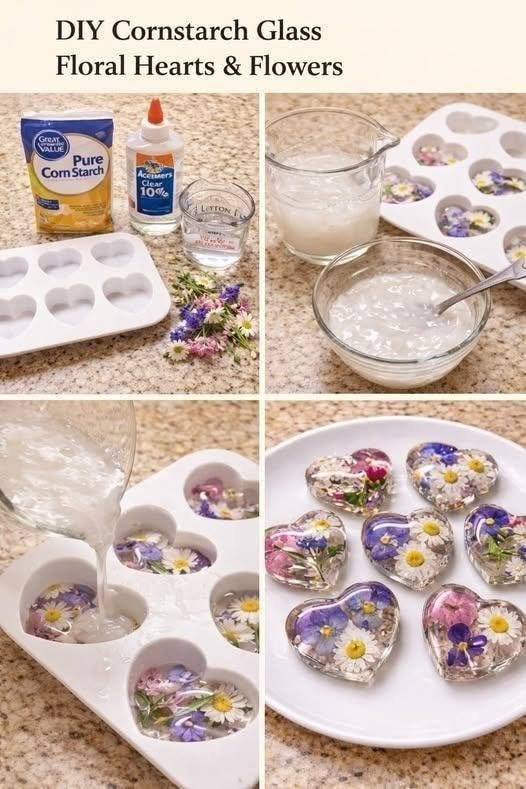
The viral “cornstarch glass” craft has taken social media by storm, allowing DIY enthusiasts to create gorgeous, translucent floral hearts and suncatchers that mimic the look of expensive stained glass. Made using inexpensive, biodegradable kitchen ingredients, it’s a fun and creative way to add a colorful, light-catching touch to your windows.
Here is a breakdown of what this craft is, how it works, and tips for getting the best results:
What Is “Cornstarch Glass”?
The technique typically involves cooking or mixing common household items (primarily cornstarch, water, glue, and food coloring) to create a vibrant, fluid medium. When poured into a outlined design and left to dry, it hardens into a glossy, semi-transparent pane that catches the sunlight beautifully.
How the Process Works
-
The Outline: Crafters usually draw or trace floral and heart patterns onto a template, then use a dark barrier (like puffy paint, dimensional fabric paint, or a hot glue mix) to create raised black lines—mimicking the lead cames of traditional stained glass.
-
The Pour: Once the outline is completely dry, the colorful, translucent cornstarch mixture is carefully poured or dripped into the individual petal and leaf sections.
-
The Drying: As the mixture dries over a couple of days, it shrinks slightly and cures into a hard, glossy, stained-glass illusion that can easily be peeled off and hung by a piece of twine.
⚠️ A Reality Check & Pro Tips
While viral videos make the process look effortless, DIY faux glass has a few quirks to keep in mind if you decide to try it:
-
Surface Choice is Key: Always work on a level sheet of acetate, a heavy-duty plastic sleeve, or a smooth silicone mat so your dried suncatchers can peel off cleanly without ripping.
-
Moisture Sensitivity: Because cornstarch and glue mixtures are water-soluble, these pieces won’t hold up in outdoor rain or a steamy bathroom. They are best suited for indoor windows.
-
Fading Colors: Standard food coloring can fade when exposed to intense, direct ultraviolet sunlight for weeks on end. If you want longer-lasting vibrancy, some creators substitute food coloring with alcohol ink or translucent craft dye.