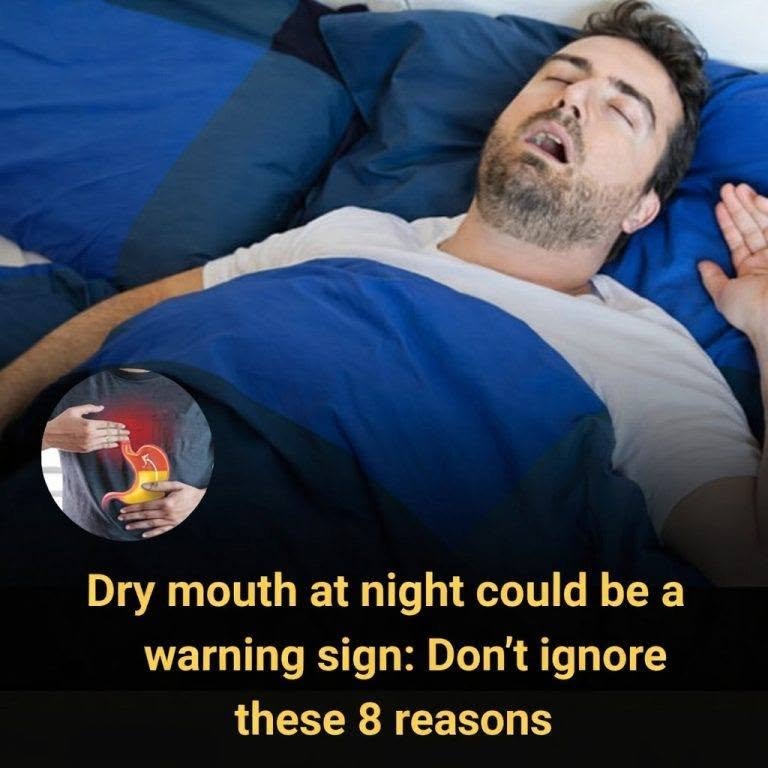
Experiencing a dry mouth at night (xerostomia) is common, especially if you sleep with your mouth open, breathe through your nose due to allergies, or haven’t had enough water before bed. However, when nighttime dry mouth is persistent, it can be a warning sign of an underlying medical condition or a side effect of medication that requires attention.
Saliva is crucial: it neutralizes acids, washes away food particles, keeps oral tissues lubricated, and begins the digestive process. When saliva production plummets at night, it can impact your whole body.
Here are 8 warning signs and symptoms associated with nighttime dry mouth that you shouldn’t ignore:
1. Waking Up with a Burning or Sore Throat
Without a steady flow of saliva to keep the mucous membranes in your mouth and throat lubricated, the delicate tissues dry out completely overnight. This often results in waking up with a raw, scratchy, or burning sensation in your throat and roof of your mouth that feels distinct from a typical cold or strep throat.
2. Difficulty Swallowing or Speaking (“Sticky” Mouth)
Saliva acts as a natural lubricant. If you wake up feeling like your tongue is sticking to the roof of your mouth, or if you have to cough or clear your throat repeatedly just to swallow your saliva or speak clearly, it indicates a severe lack of moisture.
3. A Rapid Increase in Tooth Decay (Cavities)
Saliva contains vital minerals like calcium and phosphate that remineralize tooth enamel, and it acts as a buffer against cavity-causing bacteria. When your mouth is chronically dry at night, bacteria thrive unchecked. If you notice a sudden wave of new cavities or decay forming around the gumline, chronic dry mouth is very often the culprit.
4. Persistent Bad Halitosis (Morning Breath Beyond Normal)
Everyone has “morning breath” to some degree, but chronic dry mouth leads to severe halitosis. Because saliva helps wash away dead skin cells, food debris, and bacteria, a dry mouth creates an ideal breeding ground for odor-producing bacteria to multiply rapidly overnight.
5. Cracked Lips and Sores at the Corners of the Mouth
The lack of oral moisture extends to your lips, causing them to dry out, chap, and crack. Furthermore, chronic dryness can lead to painful cracks at the corners of your mouth (a condition called angular cheilitis), where saliva pools and encourages fungal or bacterial growth.
6. Altered Taste or a Metallic Sensation
Your taste buds rely on saliva to dissolve food particles and transmit flavors properly. Chronic dry mouth can dull your sense of taste, make food taste strangely bland, or leave a persistent bitter, salty, or metallic taste in your mouth upon waking.
7. Difficulty Wearing Dentures
If you wear dentures, a moist oral environment is essential for a comfortable suction fit. Without enough saliva at night, dentures can rub painfully against your gums, causing friction sores, irritation, and inflammation of the oral mucosa.
8. Frequent Fungal Infections (Oral Thrush)
Saliva contains natural antimicrobial properties that keep fungal populations in check. When those properties are missing, Candida fungi can overgrow, leading to oral thrush. Warning signs include white, cream-colored patches on your tongue, inner cheeks, or throat that may bleed slightly if scraped.
When to See a Doctor or Dentist
Occasional dry mouth from a stuffy nose or dry bedroom air is harmless. However, you should consult a healthcare professional if your dry mouth is persistent. It can be a sign of:
-
Medication Side Effects: Over 500 common medications (including blood pressure drugs, antidepressants, antihistamines, and muscle relaxants) cause dry mouth.
-
Sjögren’s Syndrome: An autoimmune disorder where the body’s immune system attacks its own moisture-producing glands (often accompanied by dry eyes).
-
Diabetes or Thyroid Disorders: Uncontrolled blood sugar levels can frequently manifest as extreme thirst and dry mouth.
-
Sleep Apnea: Chronic mouth breathing due to obstructive sleep apnea frequently dries out the oral cavity overnight.