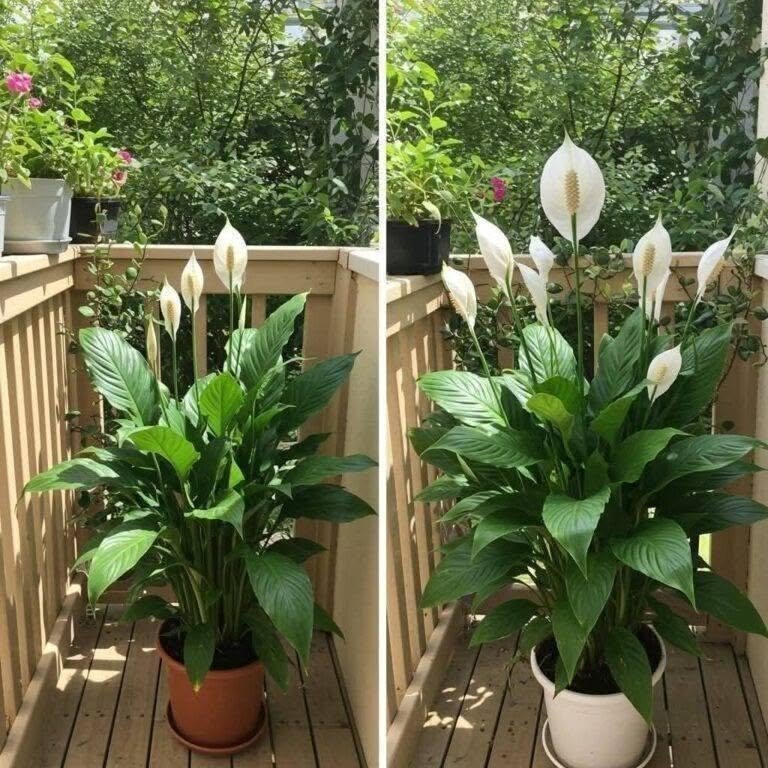
Catchy viral gardening hacks claiming that “just 1 cup of a kitchen secret” can make a stubborn peace lily explode with white flowers usually refer to home remedies like diluted rice water or mild organic tonics.
While plant care videos love a dramatic quick-fix, understanding what these kitchen tricks actually do—and what a peace lily truly needs to bounce back from looking “ugly” or neglected—helps separate internet myth from solid horticulture.
The Truth Behind the “1-Cup Rice Water” Trick
-
What it is: The viral trick usually involves using the cloudy water left over from rinsing uncooked white rice (or a heavily diluted mixture of rice flour and water).
-
How it helps: Rinsing water contains tiny traces of starches, water-soluble B vitamins, and trace minerals (like magnesium and potassium). When poured over the soil in moderation, it acts as a very mild organic micronutrient boost for the microbes and roots.
-
The Catch: It is not magic. Rice water will not force a plant to bloom if its basic environmental needs aren’t met. Furthermore, using organic starches too frequently can sour the soil, invite fungus gnats, or attract pests, so it should only be used sparingly (about once a month).
Why Peace Lilies Refuse to Bloom (and Look “Ugly”)
If your peace lily is entirely green, drooping, or filled with brown leaf tips, it is usually signaling one of four environmental roadblocks:
-
Not Enough Bright, Indirect Light:
-
The Myth: Peace lilies are famous for “surviving” in dark, windowless offices.
-
The Reality: They can survive in low light, but they rarely flower there. To trigger blooms, they need a spot with plenty of bright, indirect sunlight (such as near an east-facing window).
-
-
Rootbound Stress and Exhausted Soil:
-
If your plant has been in the same nursery pot for years, the roots may be tightly compacted and circling the bottom, leaving zero nutrients left in the degraded soil. Upgrading to a slightly larger pot with fresh, well-draining houseplant mix can instantly revitalize it.
-
-
Inconsistent Watering:
-
Peace lilies are notoriously dramatic—they will faint and droop flat when dry. However, chronic underwatering or leaving them sitting in soggy, waterlogged saucers rots the roots, completely shutting down flower production.
-
-
Tap Water Sensitivity:
-
Peace lilies are sensitive to the heavy chlorine, chloramines, and fluoride often found in standard tap water, which frequently causes those frustrating brown, crispy leaf tips. Letting tap water sit out overnight before using it—or switching to filtered water or rainwater—makes a noticeable difference.
-
How to Revive an “Ugly” Peace Lily
-
Prune the Dead Weight: Use clean scissors or shears to snip away completely yellow, damaged, or dead leaves right at the base of the plant. This stops the plant from wasting energy trying to fix dying foliage and redirects its strength into pushing out fresh, vibrant new leaves and white spathes (flowers).
-
Clean the Leaves: Dust blocks sunlight absorption. Gently wiping down the large green leaves with a damp cloth helps the plant photosynthesize much more efficiently.