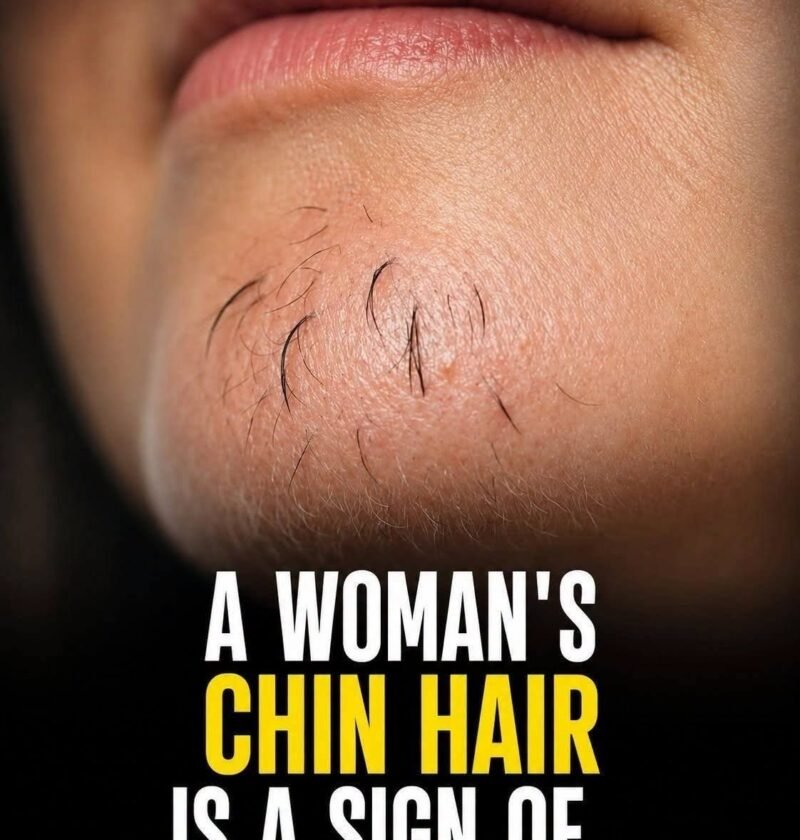
While a stray chin hair or two can simply be a normal part of aging or genetics, experts note that a sudden increase in coarse, dark facial hair—a condition known medically as hirsutism—can sometimes be a signal from your body that your hormones are out of balance.
As estrogen levels drop during perimenopause and menopause, or if androgen (male hormone) levels rise, hair follicles on the chin and jawline can become more sensitive, causing finer vellus hairs to turn into darker, thicker terminal hairs.
Beyond normal shifts associated with aging, persistent or excessive chin hair can sometimes point to underlying health considerations:
-
Polyendocrine Metabolic Ovarian Syndrome (PMOS): Formerly known as PCOS, this common endocrine condition involves an overproduction of androgens and can cause irregular periods, acne, and weight changes alongside facial hair growth.
-
Adrenal Gland Activity: Conditions affecting the adrenal glands (such as late-onset congenital adrenal hyperplasia or issues impacting cortisol production) can also trigger an increase in androgen-driven hair growth.
-
Insulin Resistance or Medication Side Effects: Blood sugar imbalances or certain medications can similarly influence hair patterns.
For many women, a few stray hairs are completely harmless and easily managed with plucking, waxing, or laser hair removal. However, if you notice a sudden, rapid change in your hair growth patterns or if it is accompanied by other symptoms like irregular cycles or skin changes, it is worth mentioning to a doctor or gynecologist, who can run simple hormone evaluations if needed.