23 Strange Signs Your Kidneys Might Be in Trouble 🩺
A warning first: many kidney diseases cause few or no symptoms in their early stages, so a list of symptoms cannot diagnose kidney disease. Blood and urine testing is often the only way to detect it early. (NIDDK)
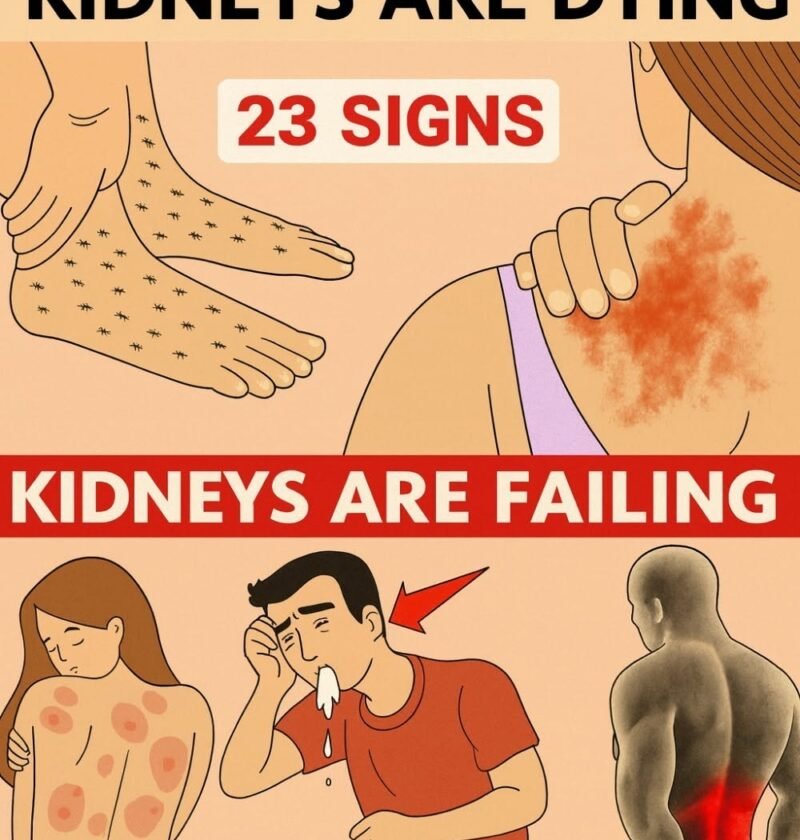
Possible signs—especially when persistent or occurring together—include:
- 🫧 Foamy or unusually bubbly urine — may indicate protein in the urine.
- 🩸 Blood in the urine — can have kidney, urinary-tract, or other causes and should be evaluated.
- 🚽 Urinating more often, particularly at night.
- 💧 Swollen ankles, feet, legs, or hands from fluid retention.
- 👀 Puffy eyes, especially in the morning.
- 😴 Persistent fatigue or low energy.
- 🧠 Difficulty concentrating or “brain fog.”
- 🌙 Trouble falling or staying asleep.
- 🤢 Nausea or vomiting, particularly with advanced kidney disease.
- 🍽️ Loss of appetite.
- 👅 Changes in taste, including a metallic or unpleasant taste.
- ⚖️ Unintentional weight loss.
- 🧴 Very dry or itchy skin.
- 🦵 Muscle cramps, particularly in the legs.
- 💪 Muscle weakness.
- 🫁 Shortness of breath, which can occur with advanced disease or fluid buildup.
- 🥱 Daytime sleepiness or poor-quality sleep.
- 🖐️ Numbness or tingling, which can occur in advanced kidney disease.
- 💧 Noticeably reduced urine output.
- 🧂 Increasing swelling after salty meals because of difficulty handling excess sodium and fluid.
- 🤕 Headaches, particularly when associated with high blood pressure or advanced kidney problems.
- 😵 Confusion or difficulty thinking clearly in severe kidney dysfunction.
- 👃 Unusual ammonia/urine-like breath odor in advanced kidney disease. (National Kidney Foundation)
⚠️ Don’t wait for symptoms
The biggest misconception is that you can reliably “feel” kidney disease. Early chronic kidney disease often has no noticeable symptoms. Diabetes, high blood pressure, heart disease, being over 60, and a family history of kidney failure all increase risk. (National Kidney Foundation)
Two particularly useful checks are:
- eGFR/creatinine blood test — estimates kidney filtration.
- Urine albumin-to-creatinine ratio (uACR) — looks for albumin/protein leaking into urine. (NIDDK)
Bottom line: Don’t panic if you recognize one of these symptoms—most have many possible causes. But persistent foamy or bloody urine, unexplained swelling, major changes in urination, or unexplained fatigue should be discussed with a healthcare professional.