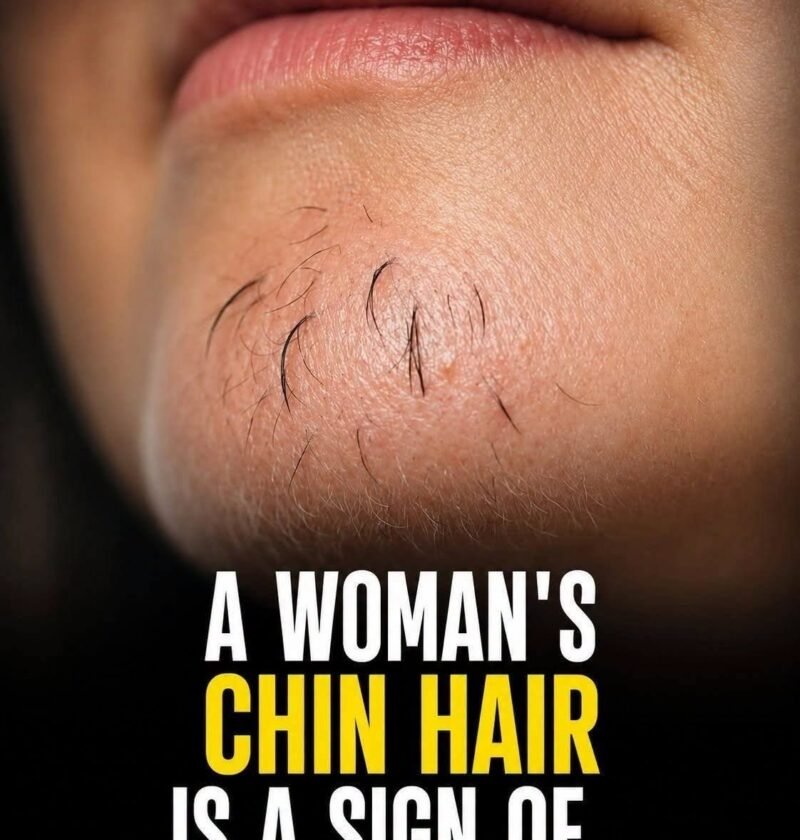
The headline “A Woman’s Chin Hair Could Be a Sign of More Than Just Aging, Experts Say” manages to be both a common biological reality and a piece of sensationalized anxiety-bait. It takes a completely normal part of human aging—coarse stray hairs sprouting on the chin—and frames it as a mysterious, alarming medical red flag.
In endocrinology and dermatology, finding a few stray chin hairs as you age is normal. However, sudden, dense, or coarse hair growth in male-pattern areas (such as the chin, upper lip, chest, or abdomen) can indeed be a clinical clue pointing toward an underlying hormonal imbalance.
Let’s separate normal physiological changes from what your body might actually be communicating.
The Reality of Facial Hair Growth in Women
Every woman has hair follicles across her face, but they typically produce fine, nearly invisible vellus hairs. However, as the endocrine system shifts over time, two primary drivers influence hair texture and growth:
-
The Normal Aging Shift (Perimenopause and Menopause):
-
What happens: As women move through perimenopause and into menopause, estrogen levels drop precipitously. Because small amounts of androgens (male sex hormones like testosterone) are naturally produced by the ovaries and adrenal glands, the ratio of estrogen to androgens shifts.
-
The Result: With less estrogen masking their effects, androgens can stimulate a few dormant hair follicles on the chin or jawline to produce coarser, darker hairs. This is a very common, benign part of hormonal aging.
-
-
Hormonal Imbalances (PCOS and Beyond):
-
What happens: When coarse, dark facial hair appears suddenly, grows rapidly, or is accompanied by other symptoms, it can point toward a clinical condition called hirsutism. The most frequent culprit is Polycystic Ovary Syndrome (PCOS), a common endocrine disorder affecting up to 10–15% of women of reproductive age.
-
Underlying Mechanism: In PCOS, the ovaries produce excess androgens, which stimulate hair follicles to behave more like male hair growth patterns, often alongside other signs like irregular periods, stubborn acne, or difficulty managing weight.
-
When to Look Closer (Clinical Red Flags)
A stray hair or two that you occasionally pluck or shave is usually just a cosmetic annoyance of aging. However, you should consult a primary care physician or gynecologist if facial hair growth is accompanied by any of the following signs:
-
Rapid onset: Coarse hair appearing and multiplying quickly over a span of months rather than gradually over years.
-
Menstrual irregularities: Chronically irregular, missed, or unusually heavy periods.
-
Sudden metabolic changes: Unexplained weight gain, stubborn acne flare-ups, or thinning hair on the scalp (female-pattern hair loss).
Simple blood tests (checking free and total testosterone, DHEA-S, or thyroid function) and an evaluation can easily clarify whether an underlying hormonal shift like PCOS is at play.
The Takeaway
Finding a rogue chin hair as you get older doesn’t mean your body is hiding a dangerous secret—it’s often just the natural shift in hormone ratios. But if coarse hair growth is sudden, dense, and paired with cycle changes, it’s a worthwhile conversation to have with your doctor rather than just relying on tweezers.