When people think of liver trouble, they usually picture symptoms in the upper abdomen, like pain or yellowing of the eyes. However, because the liver plays a massive role in filtering blood, managing fluid balance, and producing essential clotting and transport proteins, a struggling liver can actually cause noticeable physical signs down in your legs and feet.
5 Warning Signals Your Liver May Send Through Your Legs
-
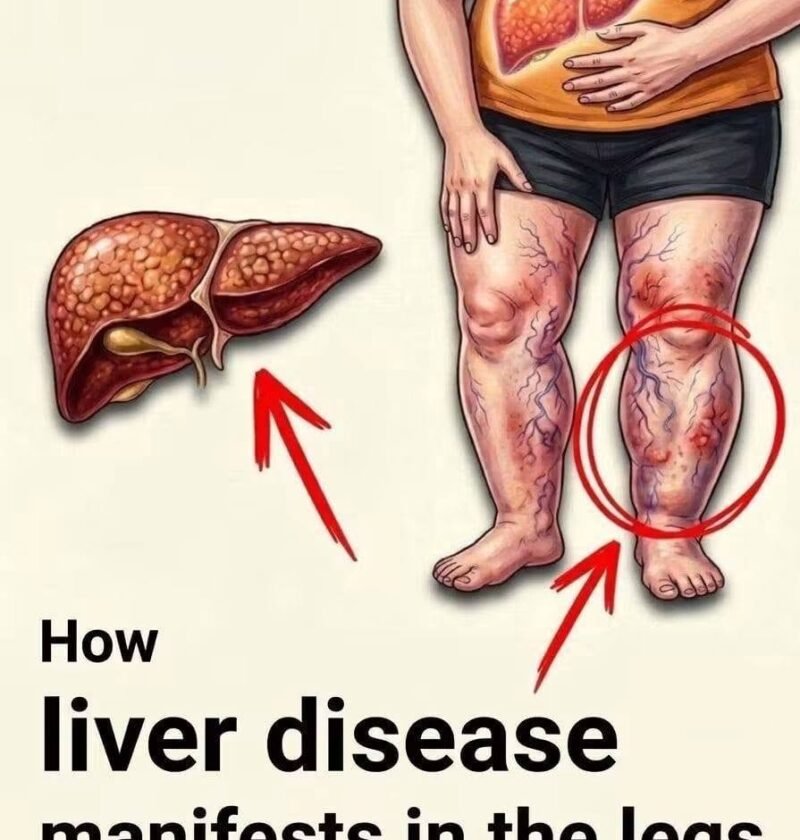
Swelling in the Legs, Ankles, and Feet (Edema): When the liver becomes stressed or scarred (such as in cirrhosis), it stops producing enough albumin—a vital protein that keeps fluid inside your blood vessels. Combined with increased pressure in the abdominal blood vessels, this fluid leaks out into the surrounding tissues, causing noticeable, heavy swelling in the lower extremities.
-
Fluid Accumulation and Discomfort (Ascites and Leg Pressure): While fluid buildup primarily collects in the abdomen (known as ascites), this heavy internal pressure pushes down against the veins and lymphatic vessels in the pelvis and legs. This can make your legs feel tight, heavy, or achy, and make simple footwear feel uncomfortably snug.
-
Unexplained Easy Bruising or Purplish Spots: Your liver manufactures the proteins responsible for healthy blood clotting. When liver function declines, your blood doesn’t clot as efficiently. You might notice that your legs and shins develop bruises from very minor bumps, or you may see small, reddish-purple dots (petechiae) caused by tiny leaking blood vessels under the skin.
-
Persistent, Deep-Seated Itching: A sluggish liver or blocked bile ducts can cause bile salts to back up into the bloodstream. While this is a whole-body sensation, it frequently affects the lower legs and feet intensely, leading to persistent scratching that can leave the skin dry, irritated, or scaly.
-
Muscle Cramps and Weakness: The liver helps process and store essential nutrients, and it works closely with the kidneys to maintain electrolyte balance. Liver strain can disrupt mineral levels and fluid balance in the body, frequently triggering painful, sudden muscle cramps in the calves and feet, particularly at night.
When to Seek Medical Attention:While minor leg swelling or cramping can happen for many reasons (like long hours of standing or minor dehydration), experiencing persistent swelling, unexplained bruising, or a combination of these signs warrants a professional medical evaluation. A simple set of blood tests (like a liver panel) can help your doctor check how well your liver is functioning.Seek immediate medical care if leg swelling comes on suddenly in only one leg and is accompanied by severe pain, warmth, redness, or shortness of breath—as this can signal a dangerous blood clot (DVT).
Are you or someone you know currently noticing swelling or other unusual changes in your legs, or are you looking for tips on how to support everyday liver health?