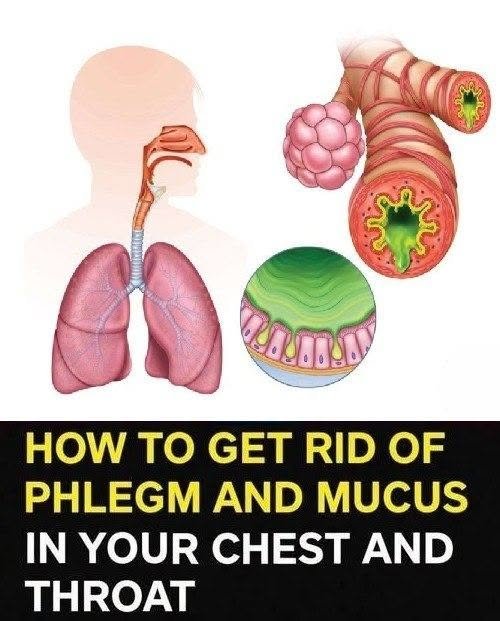
nemesis—phlegm and mucus—taking everything we discussed earlier about throat clearing and post-nasal drip, and shifting the battleground straight down into your chest.
When a headline promises a “natural” way to banish chest and throat mucus, it’s wading into territory that is half smart home care and half wild internet potion-making (like onion-honey cough syrups or vapor rubs that smell like an industrial solvent).
Here is the un-dramatized, science-backed reality of how mucus works in your chest and throat, and how you can actually clear it out safely:
The Big Difference: Chest Mucus vs. Throat Mucus
Before you can get rid of it, it helps to know where it’s coming from, because your body treats them differently:
-
Chest Mucus (Sputum/Phlegm): This is produced deep down in your bronchial tubes and lungs. Your lungs have a magnificent built-in cleaning system called the mucociliary escalator—tiny hair-like structures (cilia) that push trapped dust, debris, and irritants upward out of your chest so you can cough them out.
-
Throat Mucus: As we talked about before, this is usually post-nasal drip pooling from your sinuses or a protective reaction against things like acid reflux or dry air.
What “Natural” Remedies Actually Work (And Which Are Hype)
Skip the viral hacks telling you to drink garlic tea or slather strange concoctions on your chest. Actual physiological clearance relies on physics and hydration:
-
Hydration (The Ultimate Thinner): Mucus is roughly 95% water. When you are even mildly dehydrated, that mucus becomes thick, sticky, and trapped. Drinking plenty of water or warm herbal tea thins out the secretions, making them much easier for your body to cough up or swallow naturally.
-
Controlled Humidification: Dry indoor air makes mucus crusty and hard to clear. Taking a long, steamy shower or using a cool-mist humidifier in your bedroom adds moisture directly to your airways, easing chest tightness and loosening phlegm.
-
The “Huff” Cough Technique: Instead of hacking violently—which irritates your vocal cords and inflames your airways—try “huffing.” Take a breath in, open your mouth, and use your stomach muscles to make a “ha, ha, ha” sound (like fogging up a mirror). This moves chest mucus up safely without trashing your throat.
-
Warm Saline Gargle: If the mucus is sitting high up in the back of your throat, a warm salt-water gargle helps draw out moisture, reduces localized inflammation, and washes away sticky secretions.
When to Skip the “Natural” Route and See a Doctor
While mild mucus from a cold or seasonal allergies clears up on its own, chest phlegm can sometimes signal something that needs professional attention. You should check in with a doctor if:
-
Your phlegm changes color to a dark green, rust, or bloody tint.
-
You experience shortness of breath, chest pain, or a persistent high fever.
-
The cough and chest congestion stick around for more than three weeks without improvement.
💡 The Bottom Line: Your body produces mucus for a reason—it’s a vital defense trap. You don’t need a miracle natural cure to blast it away; you just need to hydrate, add some moisture to the air, and let your respiratory tract do its job.
Did this article try to sell you a sketchy herbal “lung detox” supplement, or was it pushing a weird