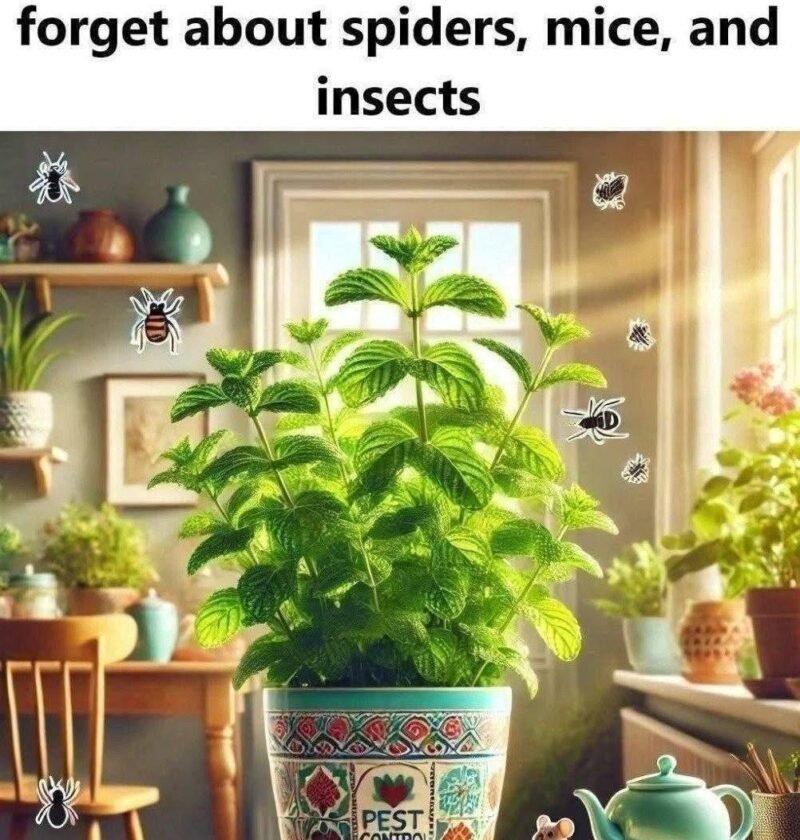
Ah, the ultimate sequel to our botanical pest-control journey! It seems the internet just can’t quit the dream of replacing a tube of caulk and a good housecleaning with a single, magical potted plant.
When a headline promises that keeping one specific plant indoors will make you “forget about spiders, mice, and insects forever,” it is leaning into the exact same garden-center myth we looked at earlier—just supersized for your living room.
Here is why that single plant isn’t going to turn your house into a pest-free fortress:
The Reality of Indoor “Repellent” Plants
Whether the article is pushing a potted lavender, a mint plant, or a citronella grass, the mechanics remain the same:
-
The Aroma Problem: As we discussed, plants rely on volatile essential oils trapped inside their leaves to deter pests in nature. Just sitting quietly in a ceramic pot on your kitchen counter does not release enough airborne scent to drive away a hungry mouse or deter a spider looking for a dark corner.
-
The Adaptation Factor: Even if a plant has a strong scent, pests are remarkably adaptable. Spiders and mice won’t pack their bags and leave your home just because there’s a fresh herb sitting across the room. If there are food crumbs, moisture, or dark, quiet nesting spots, a mouse will happily build a nest right next to a potted peppermint plant.
The One Exception: Carnivorous Plants (With a Catch!)
Sometimes these articles feature a Venus Flytrap or a Pitcher Plant, claiming they will wipe out your household bugs.
-
While it is true that these fascinating plants actually do eat insects, they are adapted to specific outdoor bog environments and usually struggle to survive indoors as low-light houseplants.
-
More importantly, they eat whatever happens to crawl directly onto them—they won’t hunt down the spiders in your basement or clear out a mouse infestation.
The Real “Pest-Proofing” Checklist
If you want to genuinely forget about unwanted household guests, skip the nursery trip and stick to the unglamorous basics:
-
Seal entry points: Use caulk and weatherstripping to block cracks around doors, windows, and your home’s foundation where mice and bugs sneak inside.
-
Cut off the food supply: Store pantry staples (grains, flour, pet food) in airtight glass or thick plastic containers so mice and pantry bugs can’t chew through them.
-
Manage moisture: Fix leaky pipes and use exhaust fans in bathrooms to deny crawling insects the standing water and high humidity they crave.
Did this article try to hype up a specific “miracle plant” like eucalyptus or lavender, or was it just trying to get you to click on a generic slideshow of houseplants