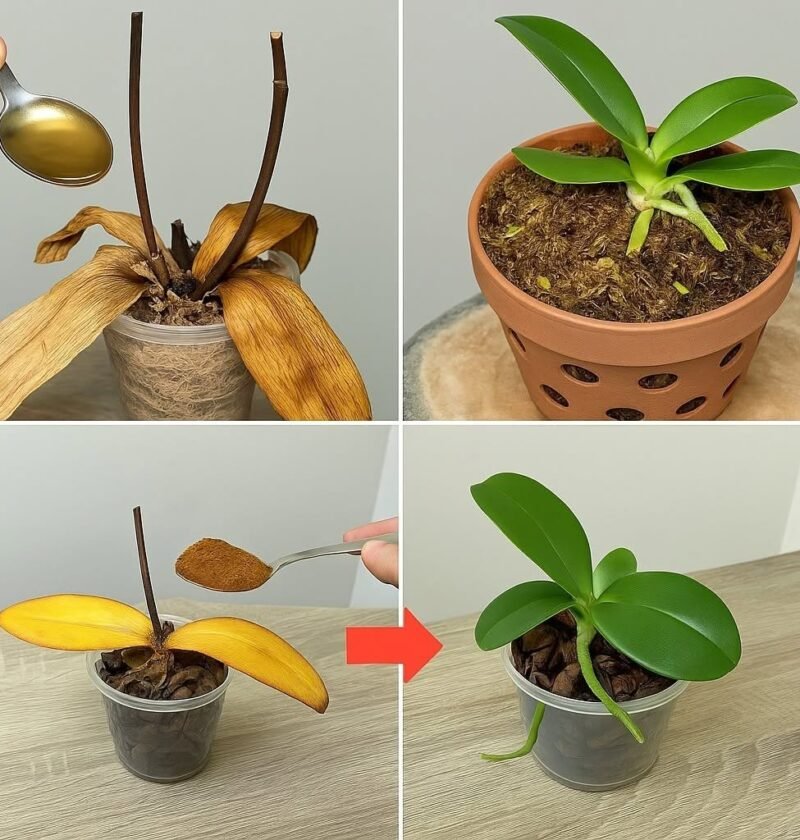
That phrase is a classic hook from popular online gardening videos and social media “life hacks” (often featuring ingredients like rice, crushed eggshells, onion water, or coffee grounds). While these videos promise a magical, overnight fix for struggling plants, the reality of orchid care is a bit more nuanced.
Here is a breakdown of what these viral hacks usually entail, whether they actually work, and what you should actually do if your orchid has dead or dying roots.
What Do These “1-Spoon” Hacks Usually Use?
Depending on the specific video, that “spoon of powder or grain” is typically:
-
Aromatic/Kitchen scraps (like onion or garlic water infusions): Purported to provide nutrients or rooting hormones.
-
Rinsed rice or rice water: Believed to supply starches and mild vitamins.
-
Baking soda, cinnamon, or crushed supplements: Sometimes recommended as anti-fungal treatments or growth boosters.
Do They Actually Revive Dead Roots?
No single spoonful of anything can magically resurrect completely dead tissue.
-
The Nature of Orchid Roots: Real orchid roots are either firm and green/silvery (healthy) or papery, hollow, and brown/black (dead). Once a root is truly dead and rotted, it cannot be brought back to life.
-
The Catch: While a home remedy or organic supplement might provide minor trace minerals, dumping random kitchen ingredients directly onto a dying root system can often cause more harm than good. For instance, excess sugars, starches, or decaying matter can invite mold, fungus gnats, and bacteria, choking out whatever healthy roots are left.
How to Actually Revive a Struggling Orchid
If your orchid is suffering from root rot or looks like it’s on its last legs, skip the internet shortcuts and follow these proven recovery steps:
-
Unpot and Inspect: Gently remove the orchid from its pot and brush away the old potting medium (bark, moss, etc.).
-
Prune the Dead Roots: Using a pair of sterile scissors or shears, carefully snip away any mushy, brown, or hollow roots. Only firm, plump roots should remain. (If the stem is completely rotted and no healthy roots are left, recovery is very unlikely).
-
Treat for Fungus (Optional): Many growers dust cut roots with a little bit of pure cinnamon powder, which acts as a natural mild fungicide and helps seal the wounds.
-
Change the Medium: Never put an orchid back into compacted, degraded soil or dirt. Orchids are epiphytes; they need chunky, breathable media like fresh orchid bark or long-fiber sphagnum moss so their roots can get air.
-
Provide the Right Environment: Place the recovering orchid in bright, indirect light and high humidity. Avoid overwatering—instead of keeping them soaking wet, let the media dry out slightly between waterings, or use a “soak and dry” method.
Are you currently trying to save an orchid with root trouble, or did one of these viral videos catch your eye and you were curious if it’s legit?