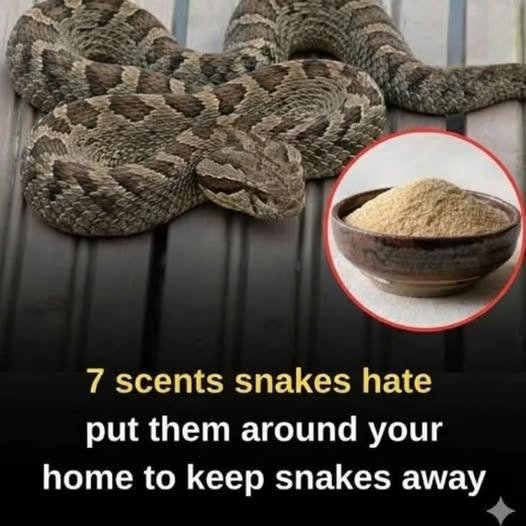
Viral home-and-garden reels love to claim that sprinkling a few drops of essential oil or planting a specific herb will act like an impenetrable forcefield, magically banishing every snake from your property forever.
Herpetologists and pest management specialists want to cut through the folklore: while snakes do possess an extraordinary sense of smell (relying heavily on their tongues to track scent particles in the air), the reality of using “scent repellents” is far more nuanced than internet life hacks suggest.
How Snakes Actually Use Their Sense of Smell
Snakes don’t smell through a nose the way mammals do; instead, they flick their forked tongues to capture chemical particles in the air and transfer them to the vomeronasal (Jacobson’s) organ in the roof of their mouth. This helps them track prey, detect predators, and navigate their environment.
While strong, pungent chemical odors can temporarily disorient or irritate them, scent repellents rarely offer long-term, foolproof protection.
The 7 Common Scents Snakes Dislike (and the Reality Behind Them)
-
Peppermint Oil:
-
The claim: The intense menthol aroma overwhelms their sensory system.
-
The reality: Highly concentrated peppermint oil can be unpleasant to snakes, but it evaporates rapidly outdoors, especially after rain or direct sunlight, requiring near-constant reapplication.
-
-
Sulfur (Often Sold in Commercial Repellents):
-
The claim: A classic powder barrier that keeps snakes away.
-
The reality: While pungent, studies show that chemical and sulfur-based deterrents have very limited effectiveness in open-air environments.
-
-
Cinnamon and Clove Essential Oils:
-
The claim: Strong spice vapors burn their sensitive olfactory receptors.
-
The reality: Much like peppermint, these oils provide only a fleeting, localized deterrent effect before fading away.
-
-
Garlic and Onions:
-
The claim: The potent sulfur compounds in Allium plants repel them on contact.
-
The reality: Snakes will readily slither right past garlic plants if there is an inviting shelter or food source nearby.
-
-
Vinegar:
-
The claim: Pouring vinegar around your patio creates a chemical acid wall.
-
The reality: Vinegar neutralizes quickly and washes away with moisture, making it entirely impractical as an outdoor barrier.
-
-
Ammonia:
-
The claim: The harsh chemical fumes mimic a toxic environment.
-
The reality: While strong ammonia fumes are unpleasant, using open pans of liquid ammonia outdoors is toxic to plants, pets, and local wildlife, and it dissipates too quickly to be reliable.
-
-
Marigolds and Repellent Plants:
-
The claim: Growing strong-scented flora creates a natural snake fence.
-
The reality: While lovely for a garden, plants cannot emit a strong enough vapor shield to physically block a wandering snake.
-
The Reality Check: What Actually Deters Snakes
If you want to keep snakes away from your home, focusing on environmental modification is infinitely more effective than relying on pleasant-smelling oils:
-
Remove Habitat (The Real Attractant): Snakes aren’t looking for you; they are looking for shelter and food (like mice and insects). Clearing out tall grass, woodpiles, heavy brush, and rock crevices close to your foundation eliminates the dark, damp places they love to hide.
-
Seal Entry Points: Check gaps under doors, around foundation vents, and utility openings. A snake cannot enter your home if the physical barriers are secure.
-
Control Rodents: Keep pet food stored securely and manage rodent populations, as eliminating their primary food source is the ultimate deterrent.
Are you looking into wildlife management for your yard, or trying to secure your home against outdoor visitors?