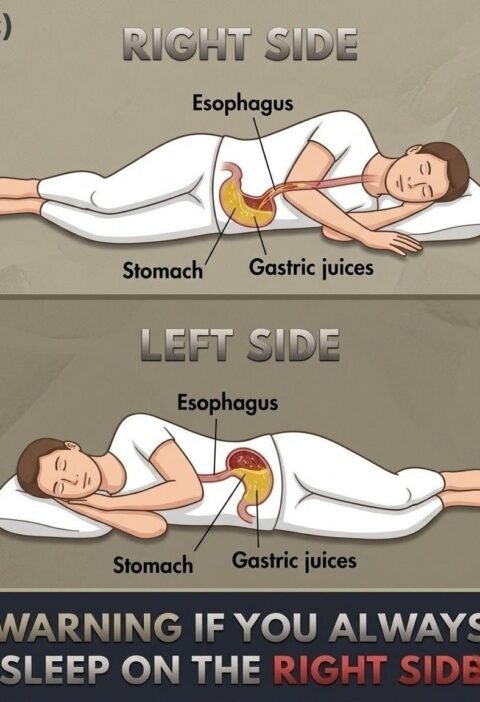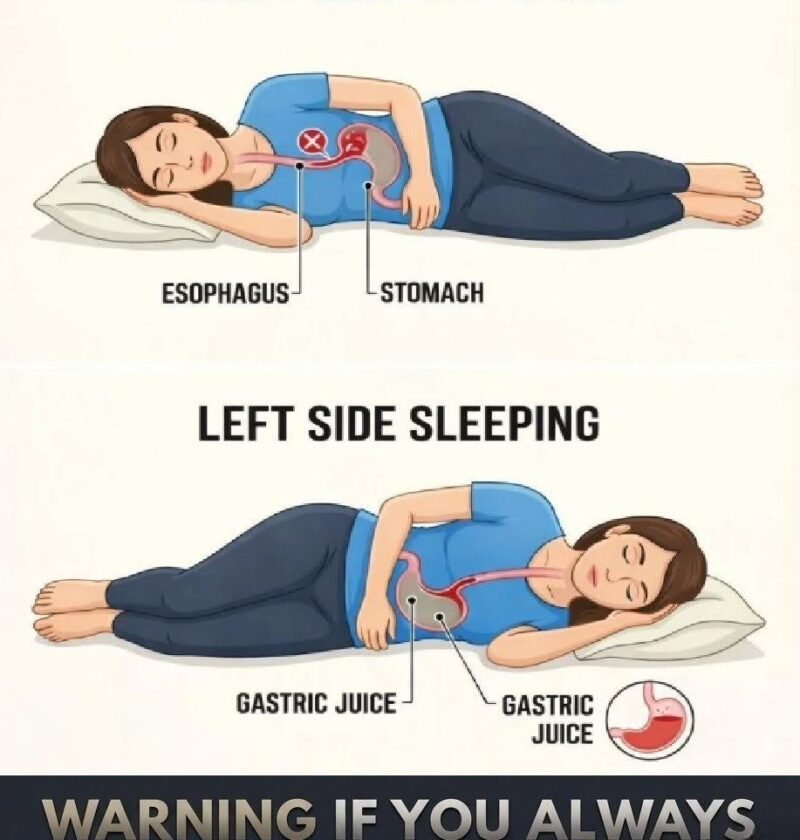
While side sleeping is generally comfortable and keeps your airways more open than sleeping flat on your back, the specific side you choose matters—especially when it comes to digestion.
Sleeping on your right side comes with a few distinct physiological drawbacks, primarily related to how your internal organs are positioned inside your body.
The Main Risks of Sleeping on Your Right Side
-
Worsened Acid Reflux and Heartburn:
-
Why: Your stomach naturally sits on the left side of your upper abdomen. When you sleep on your left side, gravity keeps your stomach acid safely below the esophagus. When you roll onto your right side, your stomach is positioned higher than the esophageal sphincter, making it much easier for stomach acid and digestive juices to leak upward, triggering nighttime heartburn and acid reflux (GERD).
-
-
Slower Digestion and Lymphatic Flow:
-
Why: Gastroenterologists often recommend left-side sleeping because gravity assists the natural movement of waste through the colon (from the ascending colon on the right, across the transverse colon, down to the descending colon on the left). Right-side sleeping works against this natural downward flow, which can sometimes worsen sluggish digestion or morning bloating.
-
-
Extra Strain During Pregnancy:
-
Why: Pregnant individuals are heavily advised against sleeping on their right side (and flat on their back). The growing uterus puts heavy pressure on the inferior vena cava—the large vein running up the right side of the spine that returns blood from the lower body to the heart. Lying on the right side can compress this vein, reducing blood flow to the heart and baby, whereas left-side sleeping optimizes circulation.
-
Is Right-Side Sleeping All Bad?
Not necessarily! For most healthy individuals without chronic acid reflux, sleeping on your right side is still entirely safe and far better than sleeping flat on your back (which can worsen snoring and sleep apnea). Furthermore, some cardiologists note that sleeping on your left side can sometimes put physical pressure on the heart or cause an uncomfortable pounding sensation for certain heart conditions, making the right side more comfortable for them.
If you frequently wake up with a sour taste in your mouth, a burning chest, or indigestion, trying to transition to your left side (or propping your upper body up slightly with a wedge pillow) can make a world of difference.
Do you usually prefer sleeping on one side over the other, or are you trying to manage specific nighttime discomforts like heartburn?