A mini-stroke—medically known as a Transient Ischemic Attack (TIA)—occurs when blood flow to a specific area of the brain is briefly blocked. Unlike a major stroke, the obstruction dissolves or clears on its own quickly, meaning symptoms typically disappear within a few minutes to an hour without leaving permanent physical damage.
However, a TIA is a critical medical warning sign. Experiencing a mini-stroke is one of the strongest predictors that a full-scale stroke may occur in the near future. In older adults, these warning signs are frequently overlooked or misattributed to normal aging, fatigue, or joint stiffness.
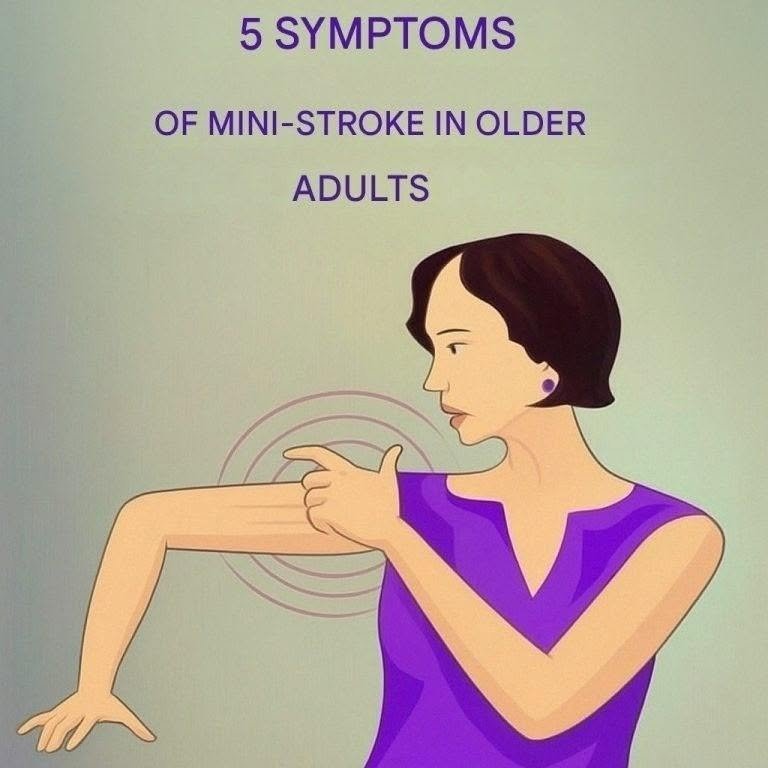
Here are 5 key symptoms of a mini-stroke in older adults that should never be ignored:
1. Sudden, Temporary Weakness or Numbness (Typically on One Side)
-
What it looks like: An older adult might suddenly drop objects from one hand, find that one leg feels heavy or unresponsive, or experience a rapid onset of “pins and needles” and numbness traveling down an entire arm or leg.
-
Why it’s often missed: Families and seniors frequently blame single-limb weakness on arthritis, a pinched nerve, or general age-related joint stiffness.
2. Sudden Slurred Speech or Trouble Finding Words
-
What it looks like: Speech may abruptly become garbled, thick, or difficult to articulate, or the person may struggle to understand what is being said to them. They might pause mid-sentence, completely unable to retrieve common words.
-
Why it’s often missed: These episodes are sometimes dismissed as tiredness, confusion upon waking from a nap, or early cognitive decline.
3. Sudden Vision Changes in One or Both Eyes
-
What it looks like: A rapid onset of blurred vision, double vision, or a temporary shadow, blurring, or partial blackout passing over one eye (often described as a window shade pulling down).
-
Why it’s often missed: Because fluctuating vision is common with cataracts or changing eyeglass prescriptions, older adults often wait it out rather than treating it as acute.
4. Sudden Loss of Balance, Dizziness, or Unsteadiness
-
What it looks like: The senior may suddenly stumble, lean heavily to one side, or experience a severe spinning sensation (vertigo) combined with a sudden lack of motor coordination.
-
Why it’s often missed: Balance issues and dizziness are routinely attributed to inner ear problems, low blood pressure, dehydration, or common medication side effects.
5. Sudden Confusion or Disorientation
-
What it looks like: An abrupt alteration in mental state where the individual becomes disoriented about their location, the time of day, or who is around them, despite being completely clear-headed moments prior.
-
Why it’s often missed: Sudden confusion is sometimes wrongly written off as an isolated episode of dementia, delirium, or fatigue.
Why Prompt Action is Crucial
Treat Every TIA as an Emergency: Because TIA symptoms resolve completely on their own, it is dangerously easy to assume the danger has passed. However, up to half of all people who suffer a major stroke experience a TIA beforehand—frequently within the following days or weeks.
If an older adult experiences any of these sudden neurological symptoms—even if they vanish entirely within minutes—call emergency services immediately. An urgent medical evaluation can uncover the underlying cause and help prevent a permanent, life-threatening stroke.