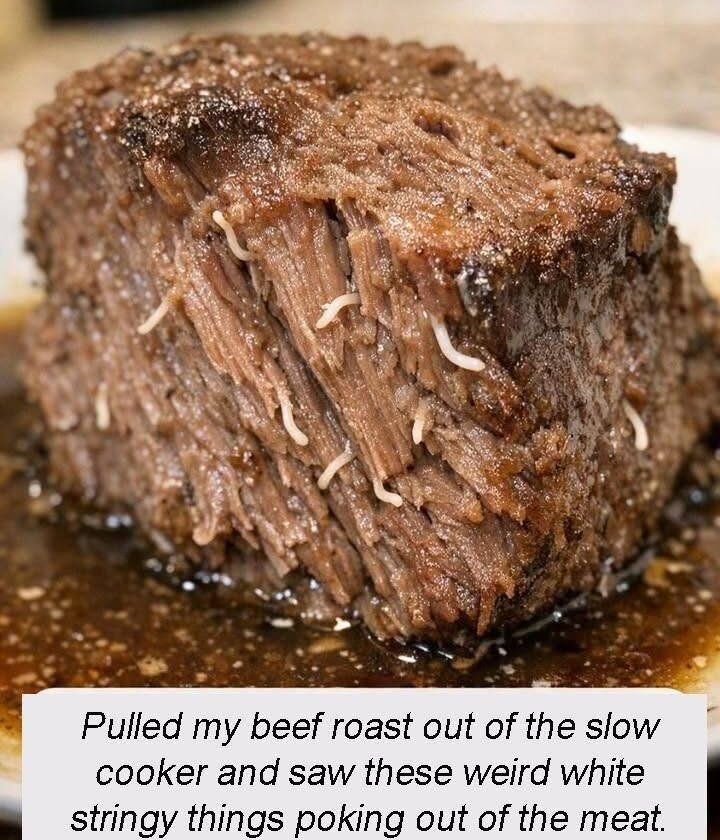
Finding unexpected white, stringy bits in a beef roast after slow cooking can certainly be alarming—it is one of the most common kitchen sights that leads people to suspect worms or parasites.
In almost all cases, your meat is not infested and is completely safe to eat.
What You Are Actually Seeing
What looks like little worms is almost certainly connective tissue (primarily collagen and muscle fibers).
-
How muscle and connective tissue work: Beef roasts (especially cuts like chuck roasts, briskets, or shoulder cuts) contain a heavy network of muscle fibers bound together by connective tissue.
-
The effect of slow cooking: As a slow cooker breaks down tough connective tissue over many hours, collagen melts into gelatin. However, the surrounding muscle fibers shrink, tighten, and lose moisture from the heat. This contraction often pushes or “squeezes” strands of connective tissue out, causing them to poke or pop out of the surface of the meat looking like small, stringy tubes.
How to Tell the Difference: Connective Tissue vs. Parasites
-
Connective Tissue: It is soft, gelatinous, attached to the meat’s structure, and can easily be pulled apart or mashed with a fork. It usually appears in bands or clusters.
-
Parasites: True parasites in commercially-sold beef are exceedingly rare due to strict agricultural inspections. Furthermore, any potential parasites would be completely destroyed by the prolonged, high heat of a slow cooker.
If the “strings” are soft, meld into the grain of the meat, and break apart easily when prodded, it is simply natural collagen and muscle structure reacting to long hours of heat. Enjoy your roast!