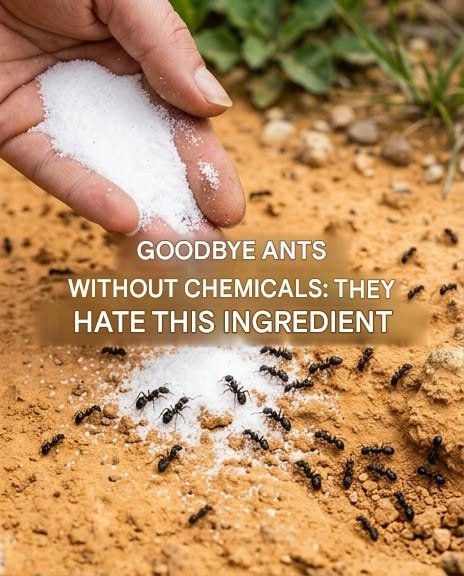
Headlines claiming you can use a single secret ingredient to “keep ants away for good” are a staple of pest-control clickbait. Whether the viral video is pushing essential oils, chalk lines, vinegar, or coffee grounds, the promise of a permanent, effortless fix to an ant problem ignores how ant colonies actually operate.
While certain natural substances can temporarily deter ants or mask their scent trails, no household trick will banish them “for good” if the root cause isn’t addressed.
Here is what these viral ant hacks actually do, what works, and why ants are so stubbornly persistent:
1. The Myth of “For Good” Pest Control
-
The Claim: Sprinkling cinnamon, spraying peppermint oil, or drawing a line of chalk will create an impenetrable barrier that repels ants permanently.
-
The Reality: Ants are relentlessly driven by the need for food and water. If an active colony is nesting near or inside your home, scout ants will simply bypass a localized barrier—or find a new route around it—the moment the scent of the deterrent fades or dries up.
2. What Popular DIY Deterrents Actually Do
While they won’t solve an infestation on their own, certain household substances have mild, short-term repellent properties:
-
Essential Oils (Peppermint, Tea Tree, Citrus): Ants rely heavily on chemical communication via pheromone trails. Strong essential oils temporarily disrupt or mask these scent trails, confusing the scouts. However, once the oil evaporates, the trail is open for business again.
-
Vinegar: Wiping down countertops with white vinegar cleans away existing pheromone trails, making surfaces temporarily less attractive to foraging ants, but it has no impact on the colony hiding behind your walls.
-
Cinnamon or Diatomaceous Earth: Ground cinnamon acts as a mild deterrent due to its strong scent, while food-grade diatomaceous earth can mechanically damage the outer skeletons of crawling insects. However, neither eradicates the queen or the nest.
3. How to Actually Solve an Ant Problem
If you want to get rid of ants effectively without falling for endless cycles of temporary sprays, you have to target the source:
-
Cut Off Their Supply Lines: Ants aren’t invading your house for fun; they are hunting for sugar, grease, or moisture. Keeping food sealed in airtight containers, wiping up crumbs immediately, and fixing leaky pipes or damp areas removes their motivation to visit.
-
Use Baits (Not Just Repellents): If you repel ants away from one spot, they just march to another. Bait traps (usually containing a slow-acting poison mixed with a sweet or protein-based attractant) work because the foraging ants carry the poison back to the nest, sharing it with the queen and the rest of the colony to eliminate it at the source.
-
Seal Entry Points: Caulk cracks around windows, doors, and baseboards where ants are sneaking in from the outside.
Have you been dealing with a sudden invasion of tiny ants in your kitchen or bathroom, or did a viral pest-control video pop up on your feed?