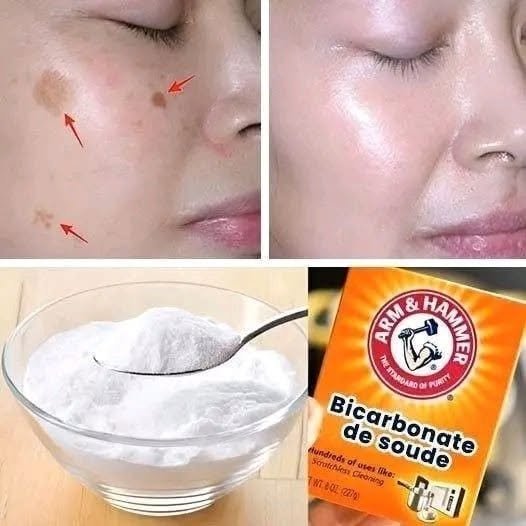
While DIY beauty hacks involving baking soda (sodium bicarbonate) frequently trend online as cheap solutions for facial flaws, dermatologists strongly advise against using baking soda on your face—especially for delicate concerns like wrinkles and dark circles.
Why Baking Soda Doesn’t Work (and Can Harm Your Skin)
-
Dark Spots: Proponents claim baking soda scrubs away dark spots. In reality, hyperpigmentation (melanin) sits deep within the lower layers of the epidermis. Baking soda only strips surface dead skin cells. Because it is intensely harsh, it often causes micro-tears, inflammation, and post-inflammatory hyperpigmentation, meaning it can actually darken spots over time, particularly on medium to deep skin tones.
-
Wrinkles: Fine lines and wrinkles require structural support, collagen stimulation, and deep hydration. Baking soda has zero impact on collagen production. Instead, its abrasive physical scrubbing and high alkalinity dry out the skin, making fine lines look more prominent.
-
Dark Circles: The skin under your eyes is the thinnest, most delicate skin on your entire body. Applying baking soda—an alkaline substance with a pH around 9—to this area will quickly strip away natural lipid barriers, leading to severe irritation, redness, burning, contact dermatitis, and potentially worsening the appearance of dark circles due to inflammation.
The Science Behind the Risk
Healthy skin is naturally slightly acidic (its “acid mantle” typically sits at a pH of 4.5 to 5.5), which protects against bacteria, pollution, and moisture loss. Baking soda is heavily alkaline. Washing your face or applying scrubs made of baking soda drastically disrupts this pH balance, destroying your skin barrier and making it vulnerable to breakouts, infections, and chronic dryness.
Safe, Dermatologist-Approved Alternatives
If you want to target dark spots, wrinkles, or dark circles safely and effectively, skip the kitchen cabinet and opt for clinically proven ingredients:
-
For Dark Spots: Look for leave-on chemical exfoliants and brighteners like Vitamin C, Niacinamide, Alpha Arbutin, or gentle AHAs (like Glycolic or Lactic acid) that target melanin production safely without abrasive scrubbing.
-
For Wrinkles: Incorporate Retinoids (Retinol or prescription tretinoin) to stimulate collagen production, alongside daily broad-spectrum sunscreen to prevent new aging signs.
-
For Dark Circles: Use eye creams containing hyaluronic acid for hydration, caffeine to constrict blood vessels and reduce puffiness, or peptides to firm the delicate under-eye area.
Are you looking to address a specific skin concern like hyperpigmentation or under-eye circles? I can help recommend a safe, gentle routine tailored to your skin type.