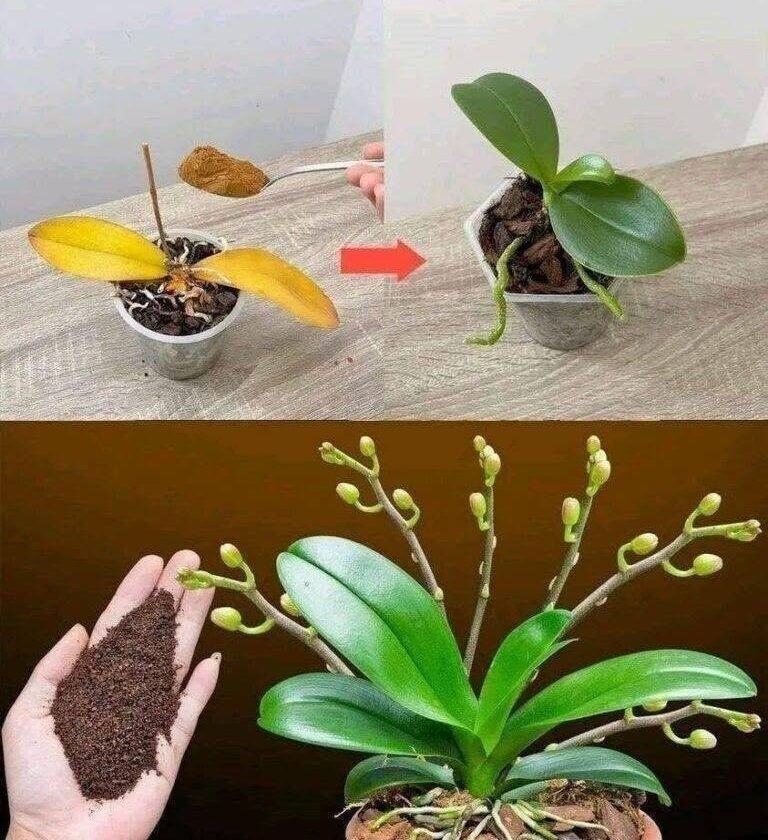
If you’re referring to the viral claim that “just one teaspoon” of a household ingredient will make an orchid suddenly produce lots of flowers, be skeptical.
There is no magic teaspoon that reliably makes orchids bloom. Flowering depends mainly on the orchid species, adequate light, temperature, watering, root health, and appropriate fertilization.
Be especially cautious with viral recipes involving baking soda, vinegar, sugar, hydrogen peroxide, or other kitchen ingredients. Applying concentrated substances to orchid roots or leaves can cause chemical injury or disrupt the growing medium.
For better flowering:
- Give the orchid bright, indirect light.
- Water thoroughly when the growing medium is approaching dryness, then let excess water drain.
- Use a balanced orchid fertilizer according to its label rather than guessing with household ingredients.
- Make sure the pot and medium provide good drainage and airflow.
- Give some orchids a suitable day/night temperature difference, which can help trigger flowering.
So, one teaspoon isn’t a miracle cure—healthy growing conditions are what make repeat blooming much more likely.