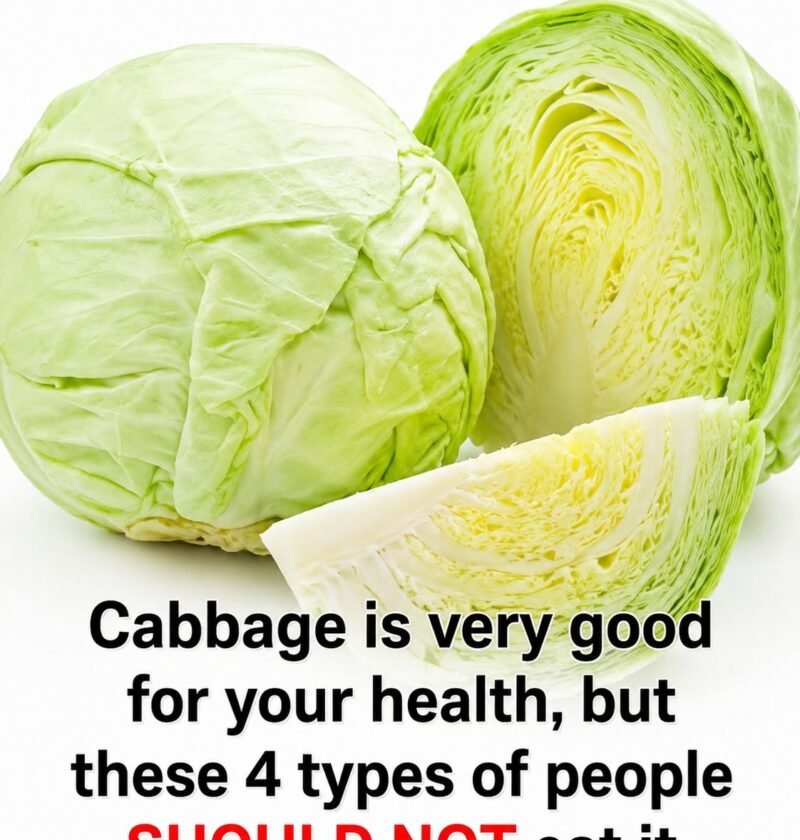
While cabbage is packed with vitamins, minerals, and fiber, it isn’t the ideal food for everyone. Certain health conditions, medications, and digestive sensitivities mean some people should limit or avoid eating it.
Here are 4 types of people who should consider avoiding or limiting cabbage:
1. People with Hypothyroidism (Underactive Thyroid)
-
Why: Cabbage belongs to the cruciferous family of vegetables, which contain compounds called goitrogens. In large amounts (especially when eaten raw), goitrogens can interfere with the thyroid gland’s ability to absorb iodine and produce thyroid hormones.
-
What to do: If you have an underactive thyroid, you don’t necessarily have to banish cabbage completely, but you should eat it cooked (as heat deactivates many goitrogenic compounds) and keep portions moderate. Always consult your endocrinologist regarding your specific dietary limits.
2. Individuals Taking Blood Thinners (Anticoagulants)
-
Why: Cabbage is exceptionally rich in Vitamin K, which plays a critical role in blood clotting. Medications like Warfarin (Coumadin) work by counteracting Vitamin K to prevent dangerous blood clots. A sudden surge or high intake of Vitamin K-rich foods can interfere with how well these medications work.
-
What to do: Consistency is key if you are on blood thinners. You don’t have to cut out cabbage entirely, but you need to maintain a very steady, consistent intake and coordinate with your doctor or dietitian before making big changes to your vegetable consumption.
3. People with IBS (Irritable Bowel Syndrome) or Chronic Bloating
-
Why: Cabbage contains raffinose, a complex sugar that humans lack the specific enzyme to break down completely in the small intestine. When it reaches the large intestine, gut bacteria ferment it, producing significant amounts of gas, bloating, cramps, and flatulence. It is also high in FODMAPs, which can trigger severe flare-ups in sensitive guts.
-
What to do: If you have a sensitive digestive system or IBS, you may want to avoid raw cabbage (like in slaws) or limit your portion sizes. Fermented cabbage (like sauerkraut) or thoroughly cooked cabbage is sometimes better tolerated, but individual reactions vary.
4. Those Recovering from Gastrointestinal Surgery or with Acute Bowel Obstructions
-
Why: The high, insoluble fiber content in cabbage makes it very tough and difficult to digest. For anyone recovering from recent bowel, stomach, or intestinal surgery—or suffering from an acute inflammatory flare-up (like severe Crohn’s disease or diverticulitis)—eating raw or fibrous vegetables can irritate the digestive tract, cause blockages, or put undue stress on healing tissues.
-
What to do: Follow strict post-operative or medical dietary guidelines provided by your surgeon or gastroenterologist, which usually prioritize low-fiber, easily digestible foods until full recovery.
💡 A Quick Tip on Preparation:For healthy individuals who experience mild gas from cabbage, cooking it thoroughly—by boiling, steaming, or roasting—breaks down some of the complex fibers and sugars, making it much easier on the stomach.
Are you looking into this for a specific dietary concern, or trying to manage a particular health condition?