🩺 Gallbladder Removal: What Really Happens After Surgery?
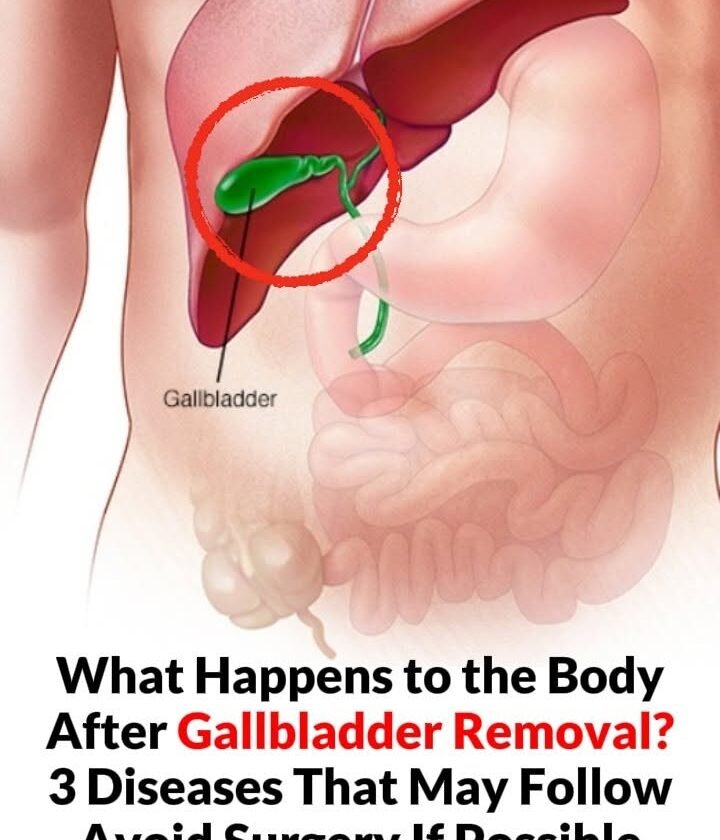
The headline “3 diseases that may follow—avoid surgery if possible” is misleading. Gallbladder removal (cholecystectomy) is a common procedure, and the gallbladder isn’t essential—you can normally digest food without it. (nhs.uk)
What changes after removal?
Your liver continues to make bile, but instead of storing it in the gallbladder, bile flows directly into the intestine. Most people eventually return to a normal, healthy diet. (NIDDK)
Some people experience:
- Diarrhea or softer, more frequent stools
- Bloating or indigestion
- Abdominal discomfort
- Occasionally, persistent symptoms known as post-cholecystectomy syndrome. (nhs.uk)
These aren’t necessarily “new diseases.” Diarrhea after surgery can sometimes be related to bile acids and is treatable if it persists. (Imperial College Healthcare NHS Trust)
⚠️ What are the genuine risks?
As with any operation, there are risks, including infection, bleeding, blood clots, bile leakage and injury to the bile ducts or nearby organs. Serious complications are uncommon. (nhs.uk)
Should you avoid gallbladder surgery?
Not automatically. People with silent gallstones often don’t need treatment, but symptomatic or complicated gallstones may require removal. Untreated gallstones can cause gallbladder inflammation, bile-duct infection/blockage or pancreatitis, which can become serious. (NIDDK)
So the decision should be based on why surgery has been recommended, your symptoms, scan results and overall health—not fear of supposedly inevitable diseases after surgery.
Bottom line: Most people live normally without a gallbladder. If you’re considering surgery, ask your surgeon what benefit they expect in your particular case and what alternatives, if any, are appropriate.