When talking about blood pressure, it is helpful to distinguish between what is medically considered a healthy target and what average blood pressure tends to do as people age.
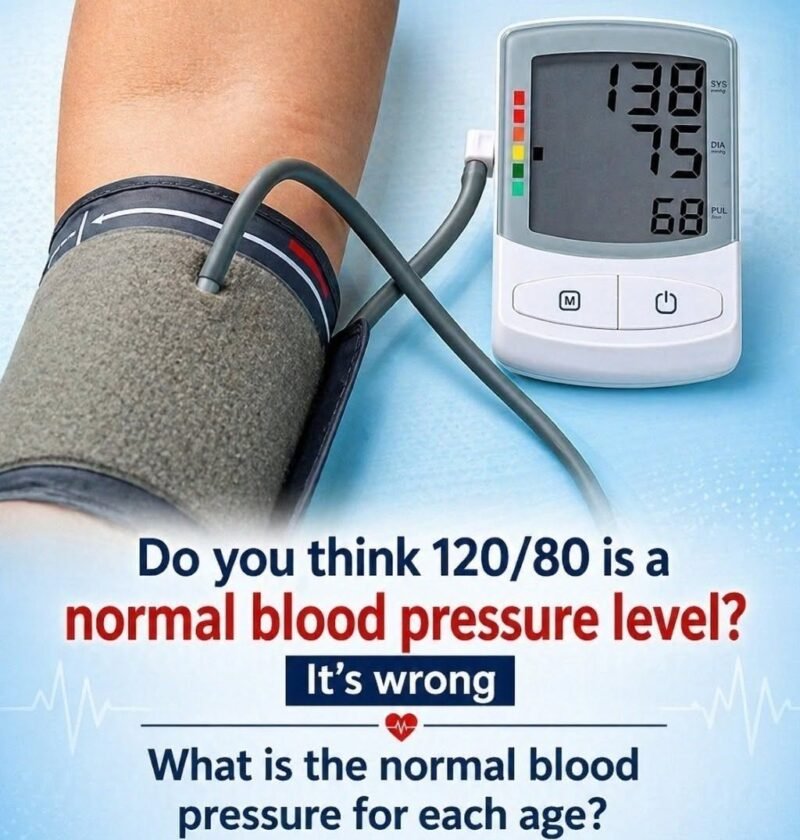
According to major medical organizations (such as the American Heart Association), the ideal clinical target for normal adult blood pressure is less than 120/80 mmHg at every age. However, average blood pressure naturally tends to drift upward as people get older due to the gradual stiffening of arteries.
1. Adult Blood Pressure Categories (Ages 18 and Older)
For all adults, clinical guidelines categorize blood pressure readings as follows:
| Category | Systolic (Top Number) | Diastolic (Bottom Number) | |
| Normal | Less than 120 | and | Less than 80 |
| Elevated | 120 to 129 | and | Less than 80 |
| Stage 1 Hypertension | 130 to 139 | or | 80 to 89 |
| Stage 2 Hypertension | 140 or higher | or | 90 or higher |
| Hypertensive Crisis | Higher than 180 | and/or | Higher than 120 (Seek emergency care) |
2. Average Blood Pressure by Age and Gender
While less than 120/80 mmHg remains the universal healthy goal, large population studies show how average blood pressure tends to shift across different decades of life:
| Age Group | Men (Average) | Women (Average) |
| 18 to 24 years | 117/72 mmHg | 110/68 mmHg |
| 25 to 29 years | 119/74 mmHg | 112/70 mmHg |
| 30 to 39 years | 122/76 mmHg | 116/72 mmHg |
| 40 to 49 years | 126/80 mmHg | 122/76 mmHg |
| 50 to 59 years | 131/82 mmHg | 128/80 mmHg |
| 60 to 69 years | 135/78 mmHg | 134/78 mmHg |
| 70 to 79 years | 138/74 mmHg | 139/74 mmHg |
| 80+ years | 142/72 mmHg | 143/72 mmHg |
Note: Just because an average reading drifts higher into the 130s or 140s with age doesn’t mean it is optimal or “healthy”. Higher averages reflect how common hypertension is in older populations, but doctors still aim to manage and treat readings that cross into Stage 1 or Stage 2 hypertension to protect long-term heart and brain health.
3. Blood Pressure in Children and Teens
Unlike adults, blood pressure in infants, children, and adolescents is not measured against a single flat number. Instead, a “normal” reading depends heavily on the child’s age, height, and gender, and is plotted against pediatric percentiles:
-
Newborns (up to 1 month): Typically ranges around 60–90 / 20–60 mmHg.
-
Toddlers & Preschoolers: Typically averages around 95–110 / 55–70 mmHg.
-
School-age children (6–13 years): Typically ranges from 85–110 / 55–70 mmHg.
-
Adolescents (14–18 years): Typically ranges from 110–120 / 65–80 mmHg. (Readings consistently over 130/80 mmHg in teens are generally evaluated as high blood pressure).
A Quick Reminder: Blood pressure fluctuates naturally throughout the day based on stress, caffeine, physical activity, and posture. A single high reading is not automatically a diagnosis of hypertension, but consistent high readings should always be evaluated by a healthcare provider.
Are you looking at these numbers for a specific age group or a recent reading you or someone else had?