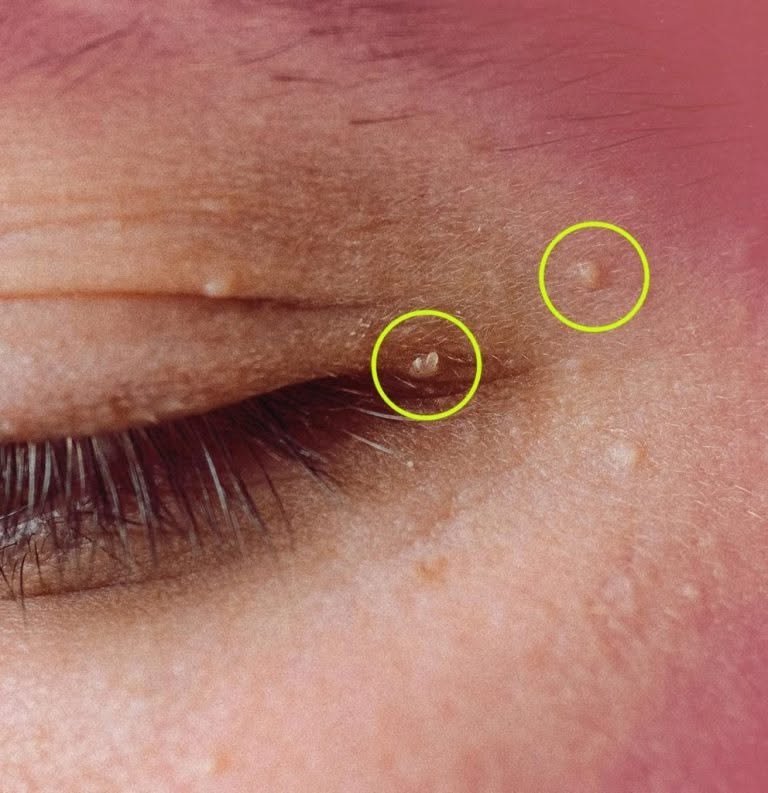
Milia—those tiny, stubborn white or yellowish bumps that often pop up around the eyes, cheeks, and nose—are frequently mistaken for whiteheads. However, unlike acne, they aren’t clogged pores filled with sebum and bacteria. Instead, they are tiny cysts formed when keratin (a skin protein) gets trapped just beneath the surface of the skin.
Because they are sealed under a thin layer of skin, squeezing or popping them at home won’t work—and usually results in bleeding, scabbing, or scarring.
Safe and effective ways to clear and prevent milia include:
1. Leave Them Alone (The Golden Rule)
-
Why: Milia are notorious for resolving on their own, especially in infants (who usually outgrow them within a few weeks). For adults, trying to force them out with fingers, needles, or pins risks introducing bacteria and causing permanent skin damage.
2. Incorporate Gentle Chemical Exfoliation
-
How it helps: Since milia are trapped layers of dead skin and keratin, speeding up your skin’s natural cell turnover is key.
-
Ingredients to look for: Use products containing alpha-hydroxy acids (AHAs like glycolic or lactic acid) or beta-hydroxy acids (BHAs like salicylic acid). These gently dissolve the bonds holding dead skin cells together, helping the trapped keratin surface and shed naturally.
3. Introduce a Retinoid (Retinol)
-
How it helps: Topical retinoids derived from vitamin A encourage rapid skin cell turnover and prevent dead skin cells from building up and forming cysts.
-
Tip: Apply a low-strength retinol or prescription retinoid a few nights a week. Because the skin around the eyes is exceptionally thin and prone to irritation, apply with caution and always follow up with daily sunscreen.
4. Switch to Lighter, Non-Comedogenic Products
-
How it helps: Heavy eye creams, thick facial oils, or pore-clogging cosmetics are primary culprits behind persistent milia—especially around the delicate eye contour.
-
Tip: Audit your skincare routine. Swap heavy, occlusive creams for lightweight, oil-free, or “non-comedogenic” gels and lotions.
5. Professional Extraction (The Fastest Route)
-
How it works: If you want them gone quickly, a dermatologist or licensed esthetician can remove them in minutes. They use a sterile, specialized micro-lancet or needle to make a tiny nick in the skin and gently slide the keratin plug out without harming the surrounding tissue.
A Quick Prevention Tip: Daily sun protection is essential. Chronic UV damage thickens the outer layer of the skin, making it much harder for dead cells to shed naturally, which dramatically increases your chances of developing milia.