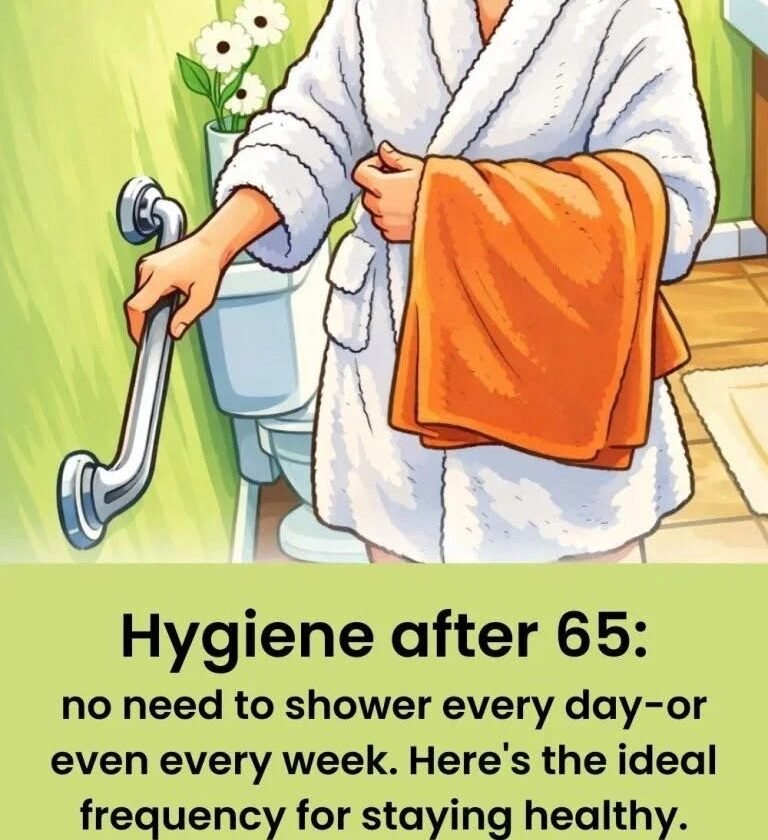
While a daily shower is a deeply ingrained habit for many, dermatologists and geriatric health experts increasingly note that after the age of 65, daily full-body showers can actually do more harm than good.
The guidance to scale back isn’t about letting go of hygiene; it’s rooted in how human skin changes as we age.
Why Aging Skin Reacts Differently to Daily Showers
-
Natural Oil Production Drops: As we grow older, our sebaceous (oil) glands slow down significantly. Skin produces far less sebum, which is the natural barrier responsible for locking in moisture.
-
Thinner Skin Barrier: The outer layer of the skin becomes thinner and loses elasticity. When you take a daily shower—especially with hot water and soap—it aggressively strips away what little natural oil remains.
-
The Risk of Micro-Cracks and Infection: Stripped, dry skin quickly turns tight, itchy, and rough. Over time, this severe dryness can cause microscopic cracks in the skin barrier, creating an open pathway for bacteria and increasing the risk of skin infections.
What Dermatologists Recommend Instead
Most healthy older adults do not need a full-body shower every day. Instead, experts generally recommend a balanced approach:
-
Reduce Frequency: A full shower or bath 2 to 3 times a week is plenty for maintaining healthy hygiene if a person isn’t heavily sweating or doing strenuous physical work.
-
Incorporate “Spot Cleans”: On the days in between full showers, a daily sponge bath or washcloth wipe of essential areas—the face, underarms, groin, and feet—keeps hygiene completely intact.
-
Adjust the Water Temperature: Hot water feels relaxing, but it acts like a solvent on natural skin oils. Switch to lukewarm water.
-
Keep It Short: Limit showers to 5 to 10 minutes.
-
Ditch Harsh Soaps: Use mild, fragrance-free cleansers or cleansing oils rather than heavily scented, harsh soaps that strip moisture.
-
Moisturize Immediately: Apply a gentle, oil-based cream or lotion while the skin is still slightly damp after patting dry. This traps the moisture in before it can evaporate.
Adjusting this routine isn’t a lapse in self-care; it’s a smart adaptation to protect fragile skin and prevent chronic itching and discomfort as the body changes.
Are you looking into this to adjust your own routine, or are you helping care for an older family member?