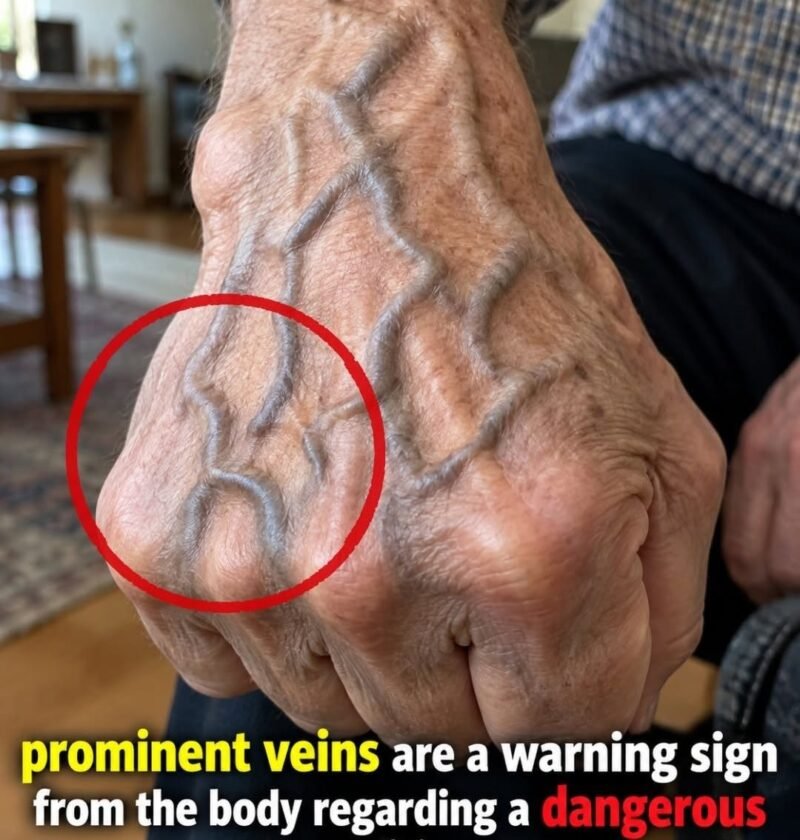
Noticeable blue or bulging veins after the age of 60 are extremely common, but they are more than just a cosmetic footnote to getting older. When prominent veins appear in the hands, temples, or legs, your vascular system is telling a specific story about how blood is moving—or struggling to move—through your body.
Understanding what those visible veins mean requires looking at the physiological shifts happening beneath the surface.
—
### Why Veins Become More Visible After 60
Two distinct processes happen as we age: changes to the skin and changes to the blood vessels themselves.
1. **The Skin and Tissue Layer:** As you age, your body naturally produces less collagen and elastin, and the subcutaneous layer of fat beneath your skin thins out. When this padding diminishes, normal veins that were previously hidden become much more apparent, especially on the hands, arms, and face.
2. **The Vascular System (The Plumbing):** Veins are responsible for carrying deoxygenated blood back up to your heart against the pull of gravity. To do this, they rely on flexible walls and tiny, one-way valves that snap shut to keep blood from sliding backward. After decades of work, these walls lose elasticity, and the valves can weaken.
—
### What Your Blood Flow Is “Screaming”
When blue veins bulge or twist—particularly in the lower extremities—it is often a sign of **increased venous pressure**. Here is what different patterns can indicate:
* **In the Legs (Varicose or Spider Veins):** If veins are prominent, ropy, or bulging in your calves, thighs, or ankles, your blood flow is fighting against gravity and failing valves. Instead of moving smoothly upward to the heart, blood pools inside the vessel. This condition is known as **Chronic Venous Insufficiency (CVI)**.
* **The “Heavy Leg” Warning:** If those visible veins are accompanied by a dull ache, throbbing, fatigue, nocturnal cramping, or swelling in your ankles by the end of the day, your blood flow is signaling that it is overburdened. Ignoring these signs can lead to skin discoloration, inflammation, or slow-healing sores over time.
* **In the Hands and Arms:** Prominent hand veins after 60 are typically harmless. They are usually the direct result of skin thinning and a lifetime of cumulative sun exposure or physical activity breaking down collagen. However, if they appear alongside sudden swelling, pain, or warmth, they require medical evaluation.
—
### Simple Ways to Support Your Circulation
While you cannot reverse the calendar, you can significantly reduce the pressure on your vascular system and help your blood flow more efficiently:
* **Activate Your Calf Muscles:** Your lower leg muscles act as a secondary pump, squeezing the veins to push blood upward. Regular, low-impact movement—such as daily walking, swimming, or seated ankle rolls—keeps that natural pump working.
* **Elevate Against Gravity:** Several times a day, take 15 to 20 minutes to rest with your legs propped up **above the level of your heart**. This gives gravity a chance to help drain pooled blood back toward your core.
* **Avoid Prolonged Stagnation:** Sitting or standing in one rigid position for hours causes blood to stagnate in the lower extremities. Make a habit of shifting positions or taking a short walk every 30 to 45 minutes.
* **Consider Medical Support:** If aching or swelling is present, talk to a physician or a vascular specialist about wearing **graduated compression stockings**, which gently squeeze the tissues to assist your vein valves.
### When to Seek Medical Attention
While mild, painless blue veins are often just a cosmetic part of aging, you should consult a doctor or vein specialist immediately if you experience:
* Persistent leg pain, throbbing, or heavy fatigue that limits your daily activities.
* Sudden swelling in only one leg, accompanied by pain, redness, or warmth (which can indicate a blood clot or Deep Vein Thrombosis).
* Skin thickening, dark brownish discoloration near the ankles, or open sores/ulcers.
Are you experiencing any physical discomfort, aching, or swelling alongside these visible veins, or is it primarily a visual change?