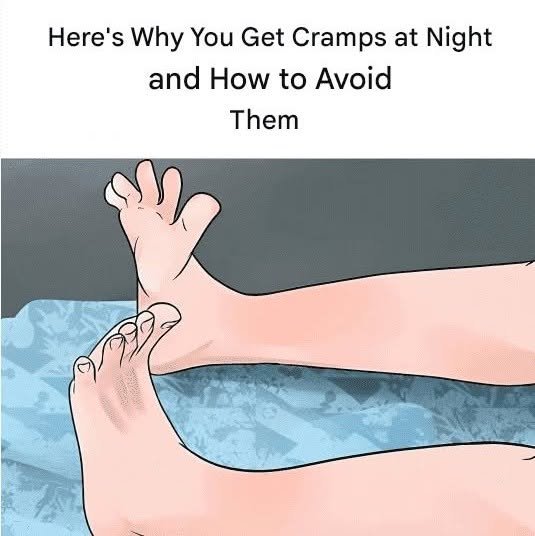
Nighttime leg cramps (nocturnal leg cramps) are sudden, painful involuntary contractions—usually of the calf muscles or feet—that can instantly wake you up. While medical experts note that the exact mechanism isn’t always fully understood, they are generally triggered by a combination of nerve and muscle factors.
Primary Causes of Nighttime Cramps
-
Muscle Fatigue and Overexertion: If you overused your muscles during the day, stood for long periods, or engaged in unaccustomed exercise, your muscles can fatigue. As your body rests and the muscles shorten or relax during sleep, they are more prone to seizing up.
-
Nerve Dysfunction: As we age (cramps become more common after age 50), minor age-related changes in nerve endings or compression can cause the nerves to misfire, sending erratic signals that tell the muscle fibers to contract forcefully.
-
Dehydration: Not drinking enough fluids throughout the day reduces overall blood circulation and fluid balance, making muscle and nerve tissues hypersensitive.
-
Electrolyte Imbalances: Low levels of essential minerals like magnesium, potassium, calcium, or sodium can disrupt the electrical impulses required for smooth muscle relaxation.
-
Sedentary Lifestyle: Sitting or remaining inactive for long stretches during the day restricts proper blood flow to the legs, leaving muscles vulnerable when you finally lie down.
-
Medications and Medical Conditions: Certain drugs (like diuretics, statins, or blood pressure medications), pregnancy, and conditions like diabetes, thyroid disorders, or poor circulation can also increase your risk.
Quick Relief and Prevention Tips
-
Immediate Stretch: When a cramp hits, forcefully stretch the muscle. For a calf cramp, straighten your leg, pull your toes upward toward your shin (dorsiflexion), or walk around gently.
-
Bedtime Routine: Do light calf stretches or ride a stationary bike for a few minutes right before going to bed.
-
Stay Hydrated: Keep your water intake consistent throughout the day.
-
Check Your Foot of the Bed: Ensure your blankets and sheets aren’t tucked in too tightly, which can force your feet to point downward while you sleep (a position that shortens the calf muscle and triggers cramps).
Do you frequently experience these cramps at night, or are you looking for ways to manage a specific pattern?