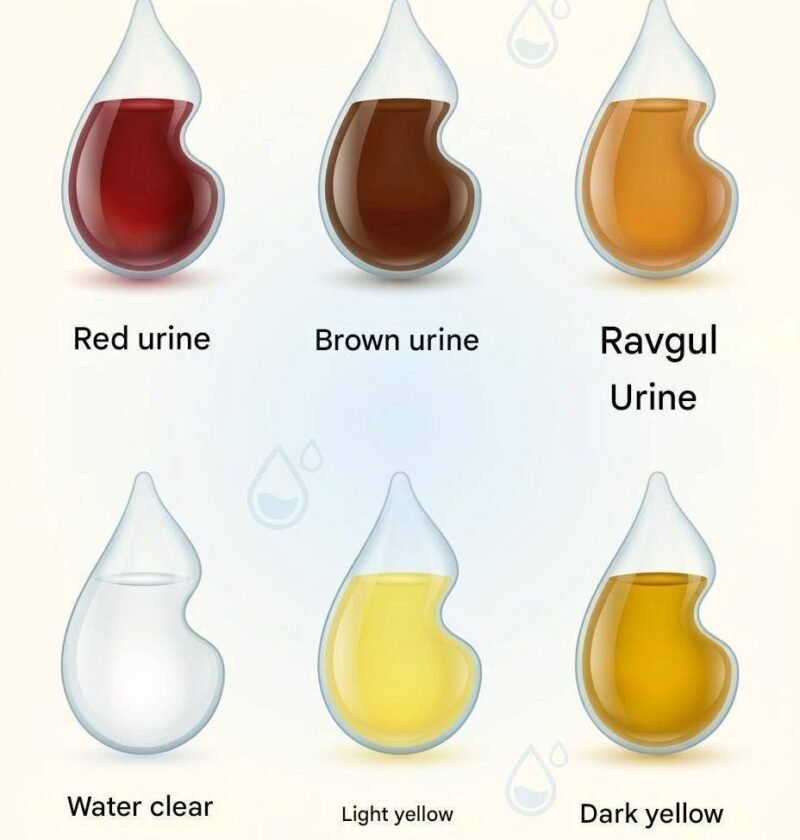
The color of your urine is a surprisingly effective window into your hydration levels, diet, medications, and overall health. Here is a guide to what different urine shades can indicate:
—
### Urine Color Guide
* **Transparent / Clear:** You may be **overhydrated**. While drinking water is healthy, drinking excessive amounts in a short period can dilute essential electrolytes in your body.
* **Pale Straw to Transparent Yellow:** This is the **ideal range**. It indicates that you are well-hydrated and your body’s fluid balance is normal.
* **Transparent Yellow to Dark Amber:** These shades represent normal variations of hydration, with **darker yellows meaning your body is asking for water**. Urine gets its yellow color from a pigment called *urochrome*, which becomes more concentrated as you drink less fluid.
* **Honey or Brown Beer:** This often indicates **severe dehydration**, but it can also point to liver issues (such as a buildup of bilirubin). If drinking plenty of water doesn’t quickly lighten your urine, it’s worth checking with a doctor.
* **Pink, Red, or Reddish-Brown:** While this can sometimes be harmlessly caused by eating beets, blackberries, or rhubarb, it can also signal **blood in the urine (hematuria)**. This requires medical evaluation, as it can be linked to urinary tract infections (UTIs), kidney stones, or issues with the bladder or prostate.
* **Orange:** This is frequently caused by certain medications (like rifampin or over-the-counterazo dyes for UTIs) or high doses of vitamin B-complex. However, like dark urine, it can also indicate liver or bile duct issues.
* **Blue or Green:** This is rare and usually harmless, typically caused by food dyes, specific medications, or rare genetic conditions.
* **Foamy or Fizzing:** Occasional foam is normal due to the force of the stream, but **consistently excessive foaming** can indicate excess protein in your urine (proteinuria), which is a sign of kidney stress.
—
### Key Takeaways
* **Hydration is dynamic:** Urine color changes throughout the day based on when and how much you drink.
* **Medications and food matter:** Always consider recent dietary changes or new prescriptions before worrying about unusual shades.
* **When to see a doctor:** Consult a healthcare professional if you notice persistent changes (like dark brown, cloudy, or pink/red urine) that aren’t explained by food or water intake, especially if accompanied by pain, fever, or unusual fatigue.
Are you noticing a specific color change right now, or are you looking into this for general health purposes?