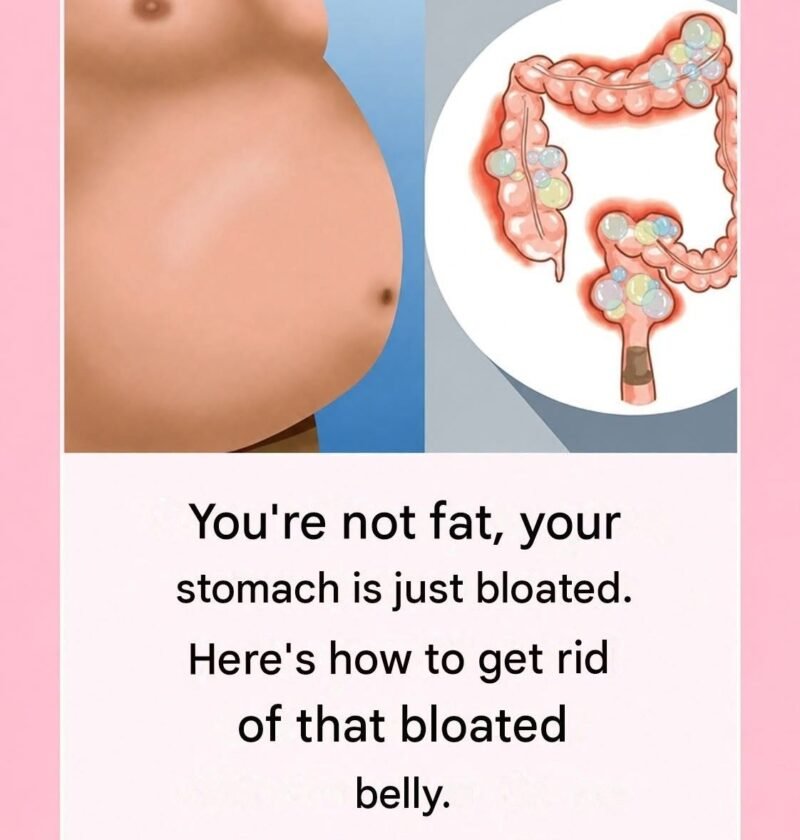
If your stomach is genuinely bloated
Bloating usually means a feeling of fullness, pressure, or visible abdominal distension, often related to gas, constipation, certain foods, or digestive conditions.
Things that may help:
- Eat slowly and avoid swallowing excess air.
- Reduce carbonated drinks if they make you bloated.
- Notice whether particular foods trigger symptoms; common triggers include beans, onions, some dairy products, and certain high-FODMAP foods.
- Increase fiber gradually, rather than suddenly eating a large amount.
- Drink enough fluids.
- Regular walking and physical activity can help intestinal movement.
- Treat constipation if that’s contributing to the problem.
Don’t fall for “flat belly” detox recipes
Lemon water, apple-cider vinegar, baking soda, herbal teas, and laxatives may be marketed as ways to “flush out” your stomach. They don’t burn abdominal fat, and some can cause diarrhea, dehydration, or electrolyte problems.
If abdominal swelling is persistent, painful, rapidly worsening, associated with vomiting, blood in the stool, unexplained weight loss, fever, or changes in bowel habits, it’s worth getting evaluated rather than assuming it’s ordinary bloating.
If you have the recipe or method from the post you’re referring to, send it to me and I’ll tell you whether it actually helps bloating and whether it’s safe.