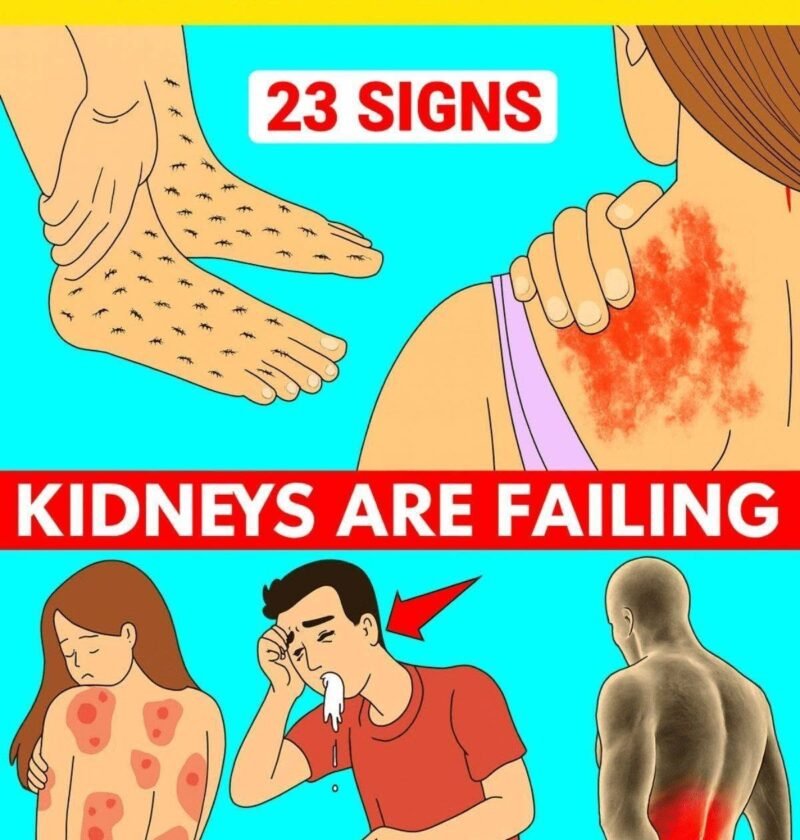
The headline “23 strange signs your kidneys might be in trouble” is a little misleading. Kidney disease often causes few or no symptoms in its early stages, so symptoms alone cannot reliably tell you whether your kidneys are healthy. Blood and urine testing is much more useful. NIDDK+1
Possible signs to pay attention to
As kidney disease becomes more advanced, possible symptoms include:
-
Swelling of the feet, ankles, legs, hands, or face
-
Puffy eyes, particularly in the morning
-
Foamy or unusually bubbly urine
-
Blood or pink/cola-colored urine
-
Urinating much more or much less than usual
-
Needing to urinate frequently at night
-
Persistent fatigue or weakness
-
Difficulty concentrating or feeling mentally foggy
-
Trouble sleeping
-
Poor appetite
-
Nausea or vomiting
-
Unintentional weight loss
-
Persistent itching
-
Dry or darkened skin
-
Muscle cramps, including nighttime leg cramps
-
Numbness or tingling
-
Shortness of breath
-
Chest discomfort
-
Headaches
-
High blood pressure
-
A persistent unpleasant or metallic taste in the mouth
-
Feeling unusually cold
-
Generalized swelling or fluid retention
Many of these symptoms are nonspecific and can be caused by conditions other than kidney disease. NIDDK+2
The most important point
If you have diabetes, high blood pressure, heart disease, or a family history of kidney failure, don’t wait for symptoms. Early kidney disease frequently has no noticeable symptoms. A clinician can check kidney function with a blood test for estimated GFR (eGFR) and a urine albumin test. NIDDK+1
If you’re producing very little or no urine, or have severe shortness of breath, chest pain, confusion, or rapidly worsening swelling, seek urgent medical attention. Acute kidney injury can develop rapidly and requires prompt evaluation. National Kidney Foundation