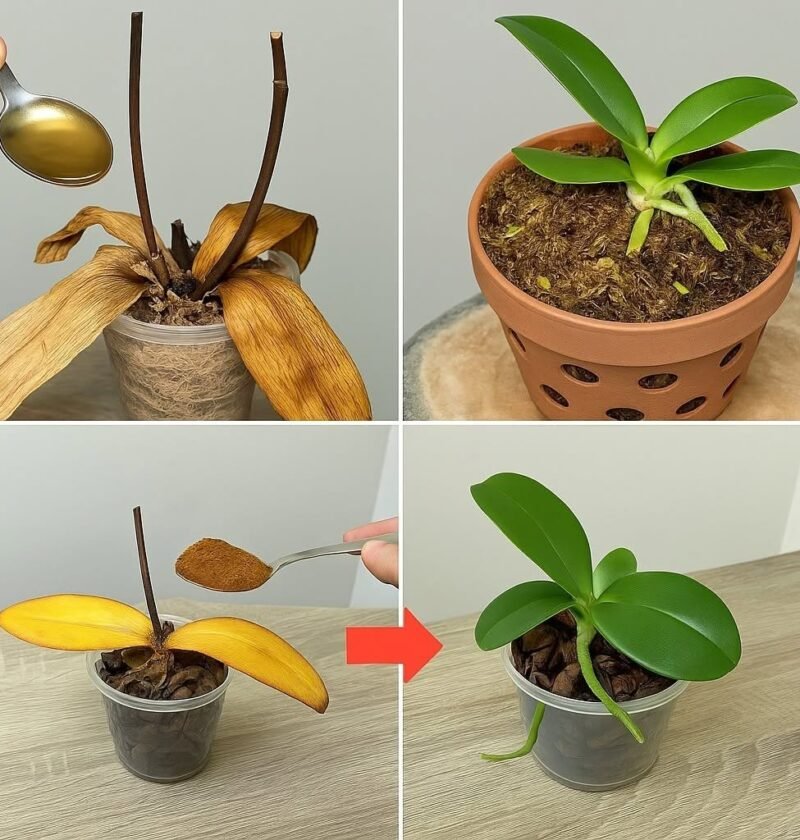
“Sprinkle 1 Spoon on Dead Orchid Roots” — Does It Really Work? 🌸
There isn’t a magic powder that can revive dead orchid roots and make an orchid bloom all year. Viral posts often recommend baking soda, cinnamon, sugar, coffee grounds, or other kitchen ingredients, but these aren’t reliable fertilizers and some can damage orchid roots.
If your orchid looks dead, try this instead
-
Remove the orchid from its pot and gently clear away the old growing medium.
-
Inspect the roots. Healthy roots are generally firm and green/silver. Dead roots are usually brown/black, mushy, hollow, or collapsed.
-
Remove dead roots with clean, sterilized scissors. Don’t cut healthy, firm roots.
-
Repot in fresh orchid bark or an appropriate orchid mix in a pot with excellent drainage.
-
Water thoroughly, then allow the medium to partially dry before watering again. Avoid letting the roots sit continuously in water.
-
Give it bright, indirect light and good air circulation.
-
Once the plant is recovering, use a diluted orchid fertilizer according to the product directions rather than sprinkling household powders onto the roots.
🌱 What if all the roots are dead?
The orchid may still be salvageable if the crown and leaves are healthy. But recovery can take months. If the crown is black, mushy, or has extensive rot, the plant may not survive.
And no fertilizer can guarantee year-round blooming. Orchids need appropriate light, temperature, watering, nutrition, and sometimes a natural change in temperature to initiate flowering.
If you tell me what the “one spoon” ingredient is from the post, I can tell you whether it’s actually safe for orchids and how to use it.