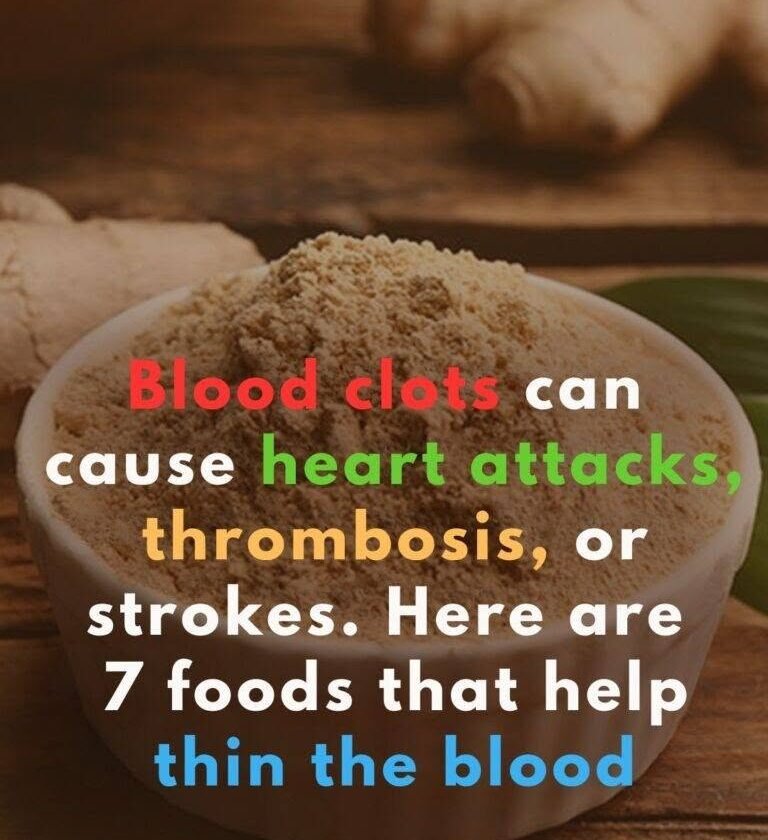
If by “blood-thinning foods” you mean foods that may affect platelet aggregation or blood clotting, there are several commonly discussed examples. But they are not substitutes for prescribed blood thinners such as warfarin, apixaban, rivaroxaban, or aspirin.
7 foods commonly associated with blood-thinning effects
-
Garlic 🧄 — Garlic can have antiplatelet effects. Garlic supplements may increase bleeding risk, particularly when combined with anticoagulants or aspirin. NCCIH+1
-
Ginger 🫚 — Ginger has demonstrated antiplatelet activity in laboratory research, although evidence that ordinary dietary amounts meaningfully thin blood in people is limited. PubMed Central (PMC)
-
Fatty fish 🐟 — Salmon, sardines, mackerel and similar fish provide EPA and DHA omega-3 fatty acids. Omega-3s can reduce platelet aggregation, although eating fish should not be thought of as equivalent to taking an anticoagulant. Office of Dietary Supplements+1
-
Turmeric 🟡 — Curcumin/turmeric has been investigated for effects on platelet function, but evidence for a clinically meaningful “blood-thinning” effect from food amounts is limited. Concentrated supplements deserve more caution. PubMed Central (PMC)
-
Cinnamon — Cinnamon is sometimes described as a natural blood thinner, but evidence for a clinically important anticoagulant effect is limited. PubMed Central (PMC)
-
Flaxseeds 🌱 — They provide ALA omega-3 fatty acids, and some human research has found effects on platelet aggregation, but this doesn’t make flaxseed a medication-level blood thinner. PubMed Central (PMC)
-
Walnuts 🥜 — Walnuts provide ALA omega-3s and can be part of a heart-healthy diet, but evidence doesn’t support using them as an anticoagulant. NCCIH
⚠️ One important warning
If you’re taking a prescribed blood thinner, don’t deliberately increase these foods or start concentrated herbal supplements to “thin your blood.” The interaction risk is generally much greater with supplements/extracts than with normal quantities used in food. Omega-3 supplements, for example, warrant discussion with a healthcare professional when you’re taking medicines that affect clotting. NCCIH
And if you’re taking warfarin, consistency is particularly important with vitamin-K-rich foods such as leafy green vegetables. You generally don’t need to eliminate them; rather, large changes in your usual intake can affect anticoagulation and INR. PubMed Central (PMC)
If you tell me which blood thinner (if any) you take, I can give you a specific list of foods to eat normally, limit, or discuss with your doctor.