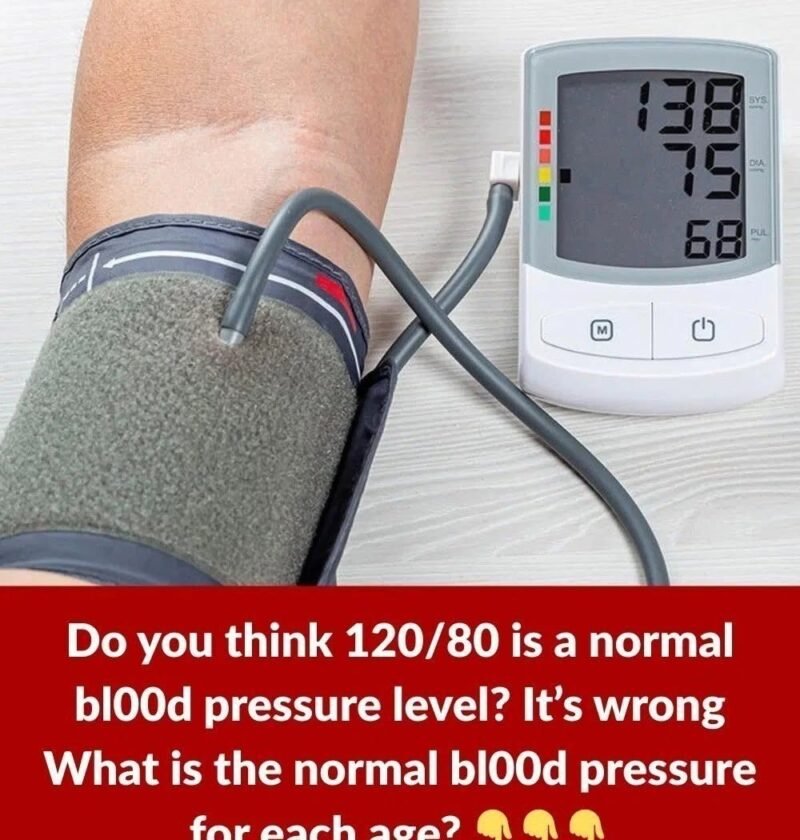
Blood pressure doesn’t have one exact “normal” value for each age. For adults, the same general thresholds are used regardless of age, while children’s normal blood pressure depends on age, sex, and height.
Normal blood pressure by age
| Age | Typical/healthy range* |
|---|---|
| Newborn (0–1 month) | ~60–80 / 30–45 mmHg |
| Infant (1–12 months) | ~70–100 / 50–65 mmHg |
| 1–5 years | ~80–110 / 50–80 mmHg |
| 6–12 years | ~90–120 / 60–80 mmHg |
| 13–17 years | Generally similar to adult thresholds |
| 18+ years | Below 120/80 mmHg is considered normal |
*These are approximate ranges, not diagnostic cutoffs. Children require age-, sex-, and height-specific assessment.
For adults
According to commonly used adult categories:
-
Normal: less than 120/80
-
Elevated: 120–129 systolic and less than 80 diastolic
-
High blood pressure, Stage 1: 130–139 or 80–89
-
High blood pressure, Stage 2: ≥140 or ≥90
-
Severely high: ≥180 and/or ≥120 — particularly concerning if accompanied by symptoms.
A single reading doesn’t necessarily mean you have hypertension. Blood pressure varies with exercise, stress, caffeine, sleep, medications, and even how you sit while measuring it.
If you tell me the person’s age and their blood-pressure reading (for example, 145/92), I can explain what that reading means.