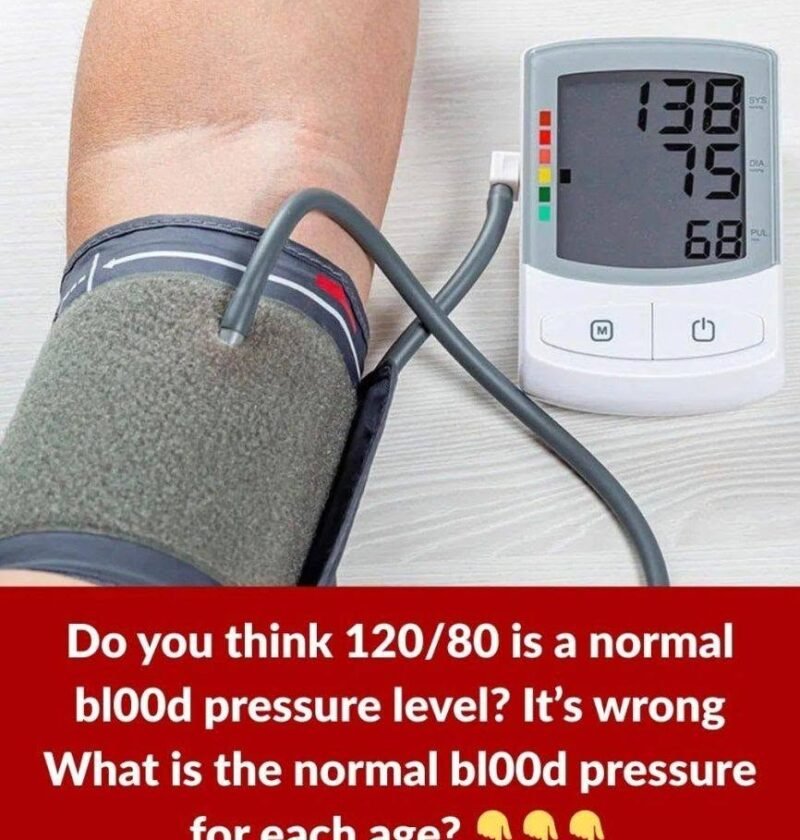
Blood pressure does not have a separate “normal” number for every age. For most adults, the usual target is around below 120/80 mmHg, although healthy ranges and treatment targets can vary.
Typical blood-pressure ranges
| Age | General reference |
|---|---|
| Newborns | ~60–80 / 30–45 mmHg |
| Infants | ~70–100 / 50–65 |
| Children 1–5 years | ~80–110 / 50–80 |
| Children 6–12 years | ~90–120 / 60–80 |
| Teenagers | ~100–120 / 60–80 |
| Adults 18+ | <120 / <80 is generally considered normal |
| Older adults | There isn’t a separate universally “normal” range; individual targets may differ |
For adults, 120–129 systolic with diastolic below 80 is generally considered elevated rather than normal, while repeated readings of 130/80 or higher may indicate hypertension depending on the guideline used.
A single reading doesn’t necessarily diagnose high blood pressure. It’s better to take several readings correctly, at rest, on different occasions.
If you give me your age and your blood-pressure reading (e.g., 145/90), I can tell you how that reading compares with the usual adult ranges.